Interconnectedness and Distributivity
Future Technologies & Media (FTM)
Neu-Ulm University of Applied Sciences
April 25, 2026
Revision
Emerging technologies
Rotolo et al. (2015) outlines five attributes that classify emerging technologies and differentiate them from other technologies:
- Radical novelty
- Relatively fast growth
- Coherence
- Prominent impact
- Uncertainty and ambiguity
Hypothesis 1
Emerging information technologies enable multimodal and immersive systems.
Multimodality
Multimodality refers to the use of multiple modes of communication to to create meaning.
Multimodality implies that the use of several means of communication contributes to a better overall understanding of a message.
Immersion
Immersion refers to the state of being deeply engaged, absorbed, or submerged in an environment, either physically or mentally.
Immersion implies that the consciousness of the immersed person is detached from their physical self. Immersiveness is the quality or degree of being immersive.
Interdependency
Stimuli that determine the immersiveness of environments created by technology are multimodal.
Visual, auditory, tactile, olfactory, and interactive.
Hypoptheses 2
Emerging information technologies enable intelligent and affective systems.
Intelligence
Intelligent systems work in complex environments, have cognitive abilities, and exhibit complex behavior.
The capacity to work in a complex environment is described as agency, cognitive abilities are, for instance, perception and language, and complex behavior is reflected, for instance, by rationality and learning.
Affection
Affective computer systems exhibit human-like capabilities of observation, interpretation and generation of emotions.
Affective systems simulate empathy. They can interpret the emotional states of humans and adapt their behavior to them, giving an appropriate response for those emotions.
Hypothesis 3
Emerging information technologies enable strongly interconnected and distributed systems.
Interconnectedness
Definition
Interconnectedness refers to a formal linkage between two different systems.
Interdependence, denotes a closer relationship in which two systems are not only connected, but depend on each other in some way, such as functionally.
Not all interconnected systems are interdependent,
but all interdependent systems are interconnected.
Computer networks
A computer network is a collection of computers and devices connected so that they can share information and services.
Unlike phone lines or cable TV, which are designed for specific tasks, computer networks are flexible. They use general-purpose equipment that can handle many kinds of data.
This versatility allows computer networks to support a vast and constantly evolving range of applications.
But a network doesn’t just physically connect boxes, it connects purposeful systems: information systems.
Information systems
An Information System (IS) is the “purposeful system” that gives meaning to a network connection. It is a structured entity designed for interaction (Krcmar, 2015).
| Logical | Structured | Interconnected |
|---|---|---|
| Defined by perimeters and inputs/outputs | Can be broken into subsystems | Exists in interaction with other systems |
| Can be modeled at various levels of abstraction | Viewed through layers (purpose, function, composition) | Connects to other systems via specific gateways |
| Described through different perspectives | Evolves through various stages in its lifetime | “No IS is an island” |
Because no IS is an island, we need a global, standardized mechanism to manage these interfaces and interactions at scale. That mechanism is the Internet.
The Internet
When we take these Information Systems (the nodes) and link them via Computer Networks (the infrastructure) on a global scale, we get the Internet.
The Internet can be defined as a public wide area computer network that uses the TCP/IP protocol suite to interconnect computer systems across the world.
The Internet provides a vast range of information resources and services such as communication (e.g., electronic mail, telephony, and instant messaging), or file transfer (e.g., file sharing, FTP, video, and audio streaming), and the metaservice WWW.
Internet connection

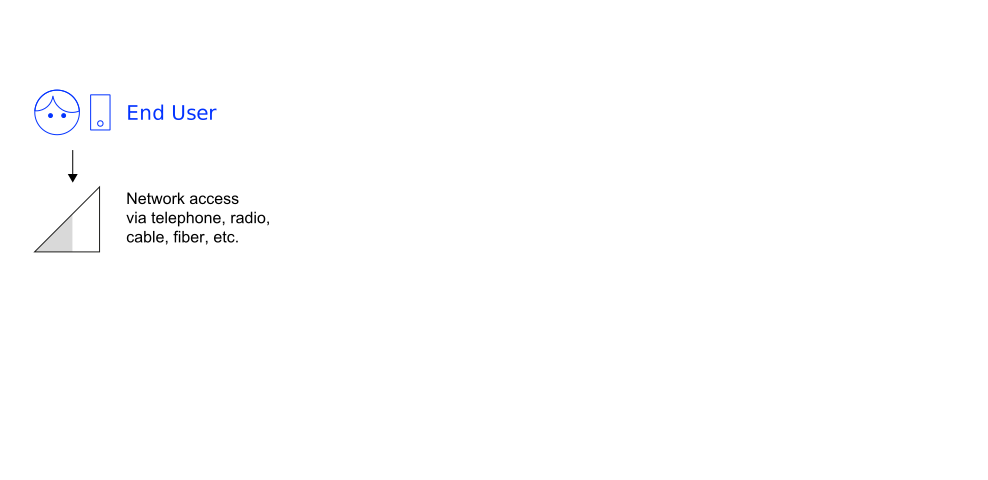
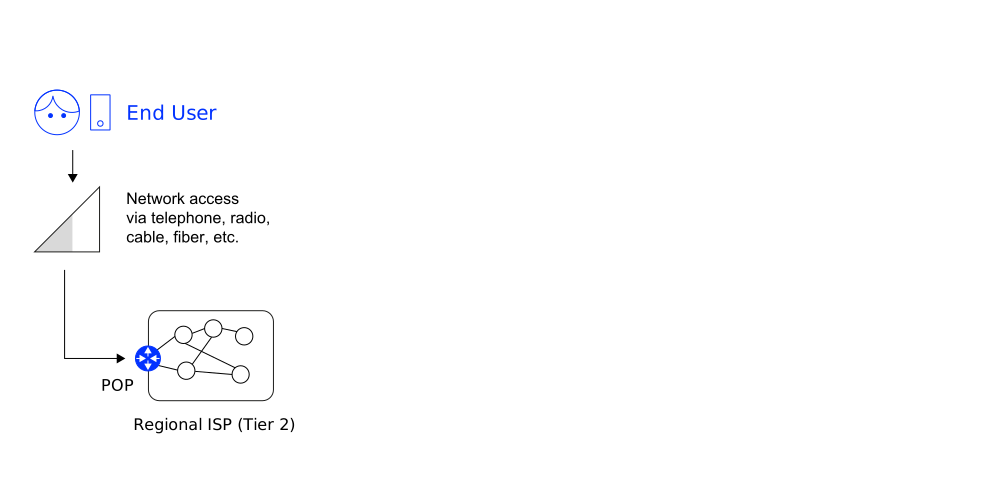
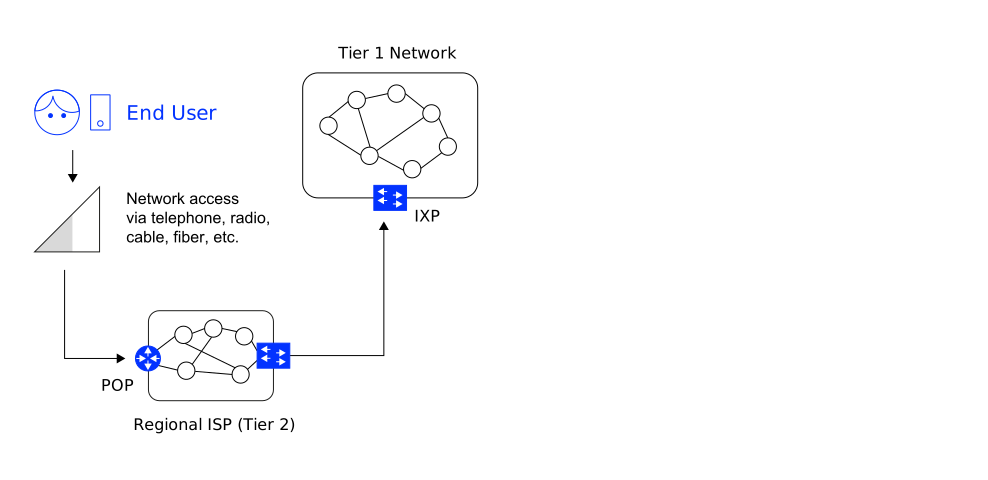
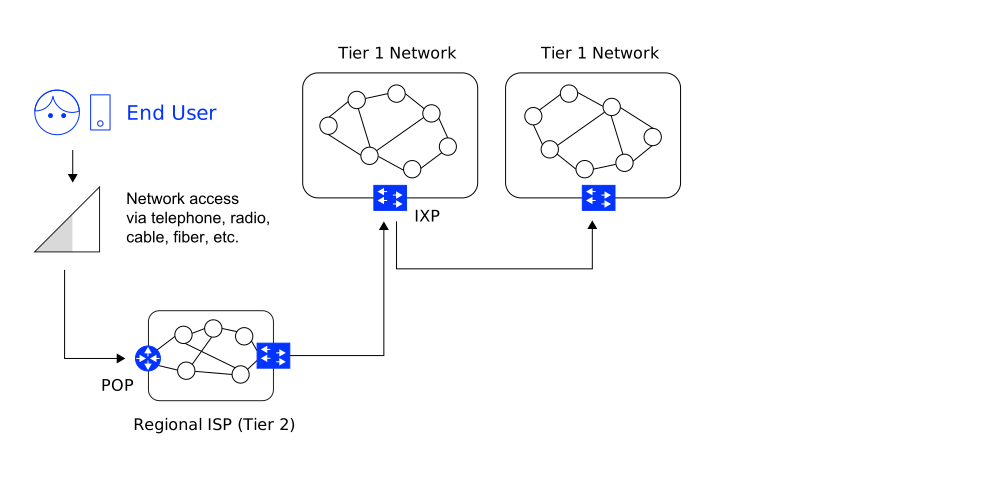
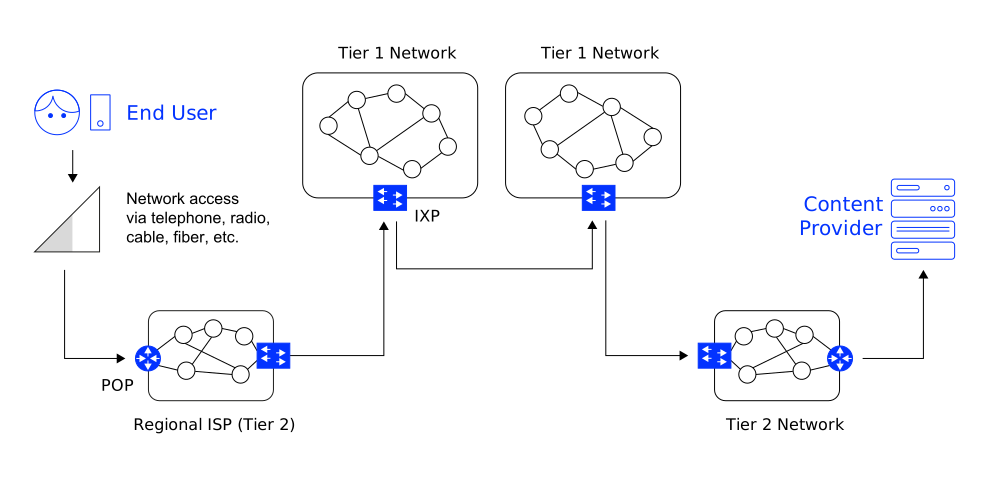
Internet Protocol Suite
The Internet Protocol Suite is a set of protocols that enable communication over the Internet by specifying data transmission, addressing, and routing.
The protocol suite encompasses protocols that are designed to work together to govern how data is transferred from one system to another. The most important protocols are BGP, TCP and IP.
Border Gateway Protocol (BGP)
BGP is the routing protocol that makes the Internet possible as an interconnected system of autonomous networks.
It enables different, independent networks (i.e., Autonomous Systems) to exchange routing information and determine the best paths for data to travel across the global Internet.
- Each network announces which IP addresses it can reach
- Neighboring networks share these announcements
- Routers build a dynamic map of possible paths
- BGP selects optimal routes based on policies and network conditions
TCP/IP
TCP/IP enables open networks by providing a universal, layered language for diverse devices to communicate, breaking data into flexible packets that find the best route, ensuring reliability with error-checking (TCP) (i.e., robustness1), and operating on open, non-proprietary standards, making it a common, accessible foundation for the internet, independent of specific hardware or software2).
In essence, TCP/IP acts like a universal postal system for data, where everyone uses the same addressing (IP) and delivery rules (TCP), allowing any sender to reach any recipient, making the internet an open platform.
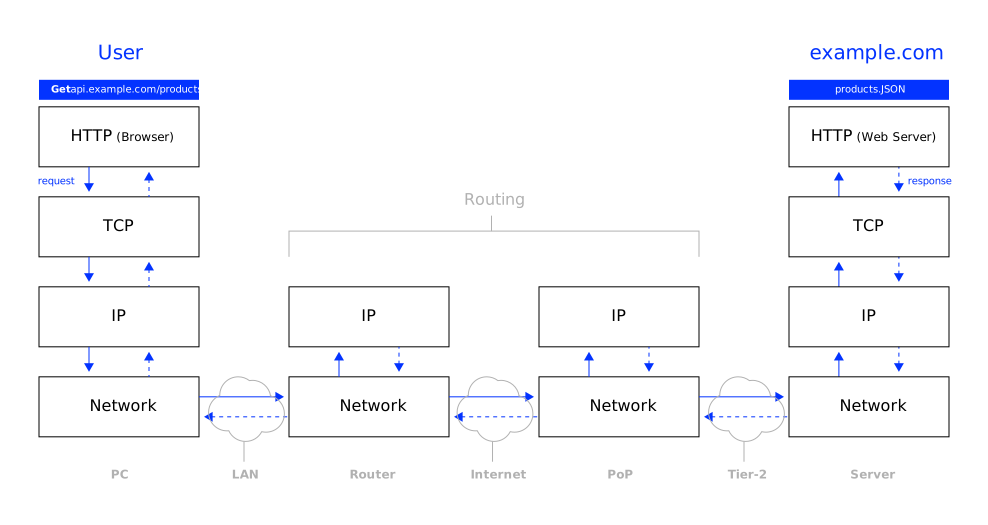
- IP is responsible for addressing host interfaces, encapsulating data into datagrams and routing data from a source host to a destination host
- TCP guarantees that all bytes are received in the right order by using positive acknowledgements (ACK) with re-transmission3
TCP/IP stack
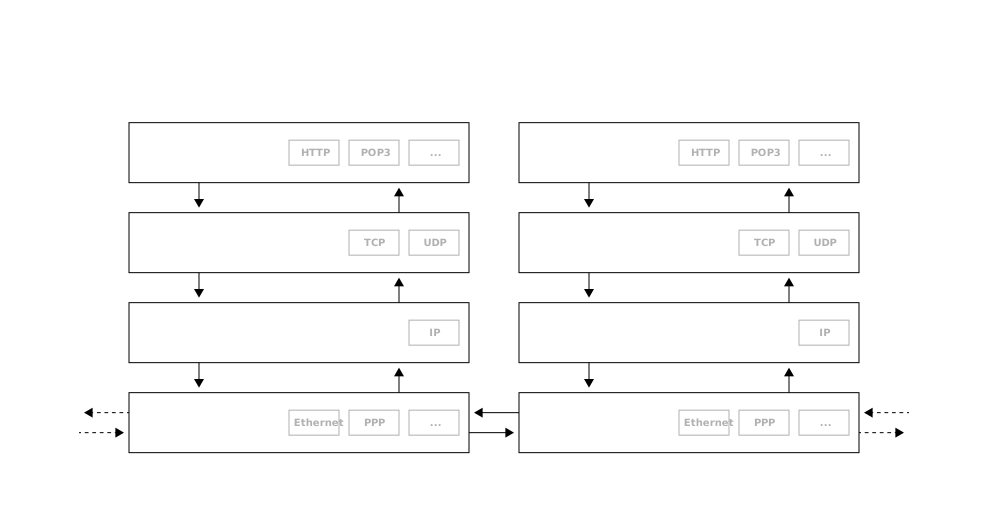
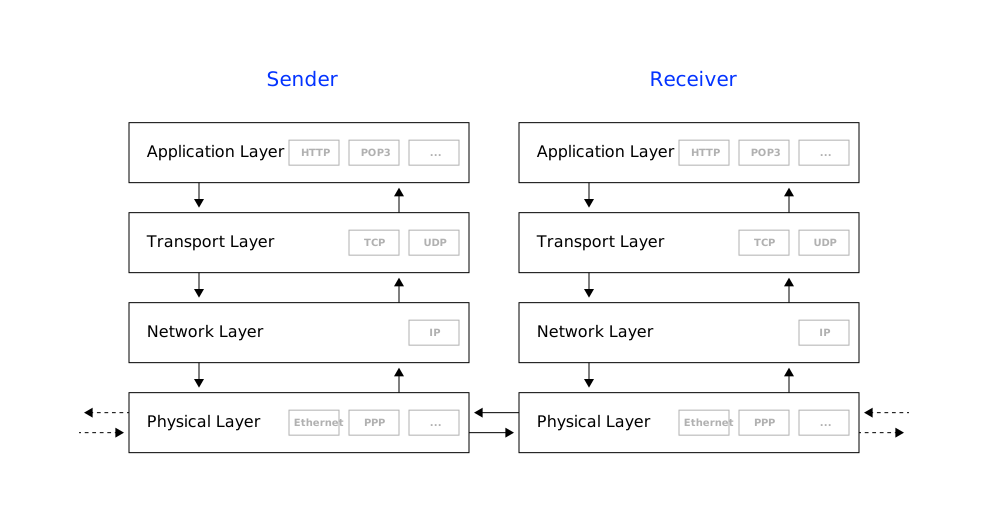
Data transmission example
Exercise
IPv6, packet switching, router,
and Domain Name System (DNS)
What is meant by the these concepts?
Why are they important for the functioning of the Internet?
How do they support the principles of independency and robustness?
Research the concepts and to prepare yourself to explain these.
10:00
Importance
The internet protocol suite based on TCP/IP is the foundation upon which the modern internet is built, and its importance extends to a vast range of emergent digital technologies such as IoT, Cloud computing, and mobile computing.
TCP/IP provides a universal language, is open and standardized, is highly scalable, and allows for great flexibility.
Summary
Emergent digital technologies facilitate more strongly interconnected systems, as they enhance
networking infrastructure, connectivity capabilities, and interoperability (e.g. through standardization).
Examples of interconnected systems are
smart cities, connected cars (Car2X), and smart supply chains.
Discussion
What challenges arise from increasingly interconnected systems?
Governance challenge
One challenge example relates to the governance of interconnected systems:
Who controls the connections?
Interconnected systems raise questions about power and control:
E.g., ISPs can influence traffic flow, when they act as gatekeepers and they can decide how data flows through their networks, and prioritize certain traffic.
Excursus: Net Neutrality
Motivation
We have seen how the internet—the most important interconnected system today— is conceptualized as a free and open network of networks built on open, non-proprietary standards like TCP/IP and BGP.
Yet it relies on ISPs and Tier-1/Tier-2 networks as gatekeepers.
Does no one really control this interconnected system?
Net neutrality addresses this fundamental tension in network architecture, aiming to keep the internet free and open.
The concept
Net neutrality signifies the principle that the Internet is a “common carrier”, i.e., a neutral “pipe” that does not distinguish between the types of content it carries.
A maximally useful public information network aspires to treat all content, sites, and platforms equally. (Wu, 2003, p. 142).
- Accessibility: Small content providers can deliver data just as fast as tech giants (e.g., a local startup vs. YouTube).
- Single Billing: Consumers pay for the “pipe” once, without “premium” fees for specific apps.
- Non-Discrimination: ISPs do not favor or block specific traffic for competitive advantage.
The power of “the connectors”
Because the Internet is a tiered system of private networks (Tier-1 & Tier-2), the owners of the infrastructure have the technical capability to act as gatekeepers.
- Zero-rating: Not counting specific apps (e.g., Spotify) against data caps, creating an unfair advantage over competitors.
- Throttling: Intentionally slowing down specific protocols (e.g., P2P file sharing or high-def video streams).
- Paid Prioritization: Creating “fast lanes” for companies that can pay, while others are relegated to the “slow lane.”
Exercise
Form groups of four to work on following tasks:
- Selects one stakeholder group: ISPs, content providers, consumers, or government.
- Research your assigned stakeholder group and summarize their arguments for net neutrality and against net neutrality.
After individual research, each student presents their assigned stakeholder perspective.
We then discuss potential compromises or solutions that address the concerns of the various stakeholders.
15:00
Recap
Discussion
No one controls the Internet.
True, false, or somewhere in between?
Discuss with your neighbour and provide arguments based on what we discussed last time.
07:00
Summary
Emergent digital technologies enable strongly interconnected systems through
Information systems
Purposeful systems with interfaces (“No IS is an island”)
Networking infrastructure
Tiered ISPs, POPs, and IXPs as the physical backbone
Open architecture
BGP, TCP, and IP: universal, layered, and standardized protocols
Governance tensions
Open architecture vs. private gatekeepers
Open questions
The architecture is open,
but what about the system?
- Who really controls an “open” network?
- Is neutrality technically possible, or just a policy goal?
- What happens when the company providing “the pipe” is also a competitor?
These tensions reappear once we move from connection to distribution.
Hypothesis 3
Emerging information technologies enable strongly interconnected and distributed systems.
Connectivity enables coherence
While interconnectedness focuses on the transmission and linkage between systems, distributivity addresses the organization and coherence of the overall system.
| Feature | Interconnectedness | Distributivity |
|---|---|---|
| Focus | How data is transmitted | Where data is processed and stored |
| Metaphor | The global highway system | The city planning and governance |
| Role | Connectivity: Points talk to each other | Coherence: Points work as one system |
| Foundation | Protocols like BGP and TCP/IP | Architecture like Cloud and Web 3.0 |
The internet protocols provide the interconnectedness required to build distributed architectures that are robust, scalable, and independent of a single central authority.
Exercise
Even with perfect interconnectedness (TCP/IP) and neutral “pipes”, the laws of physics apply: Distance creates latency. To solve this, we don’t just need better “pipes”; we need a better distribution of data.
Research what Content Delivery Networks (CDN) are and why they gained increasing importance in recent years.
07:00
Distributivity
Distributed systems
A distributed system is a collection of independent computers that appear to its users as a single coherent system.
The independent computers, also known as nodes, communicate and coordinate their actions by passing messages as they do not share a common memory.
Discussion
Let’s get back to CDNs:
- How does a CDN’s architecture differ from a single centralized server?
- What are the main benefits of such an architecture?
Key characteristics
Key characteristics of distributed systems include:
autonomy, hidden complexity (transparency), reliability, scalability, and efficiency.
Open distributed system are further characterized by their ability to integrate and interoperate with heterogeneous components, achieved through standardized interfaces and protocols that ensure different components can communicate and function together seamlessly.
Example: WWW
The World Wide Web is an information space in which the items of interest, referred to as resources, are identified by global identifiers called Uniform Resource Identifiers (URI) (Berners-Lee et al., 2004).
Resources are hosted on servers distributed worldwide, and information is routed efficiently through various networks and ISPs to reach the end user.
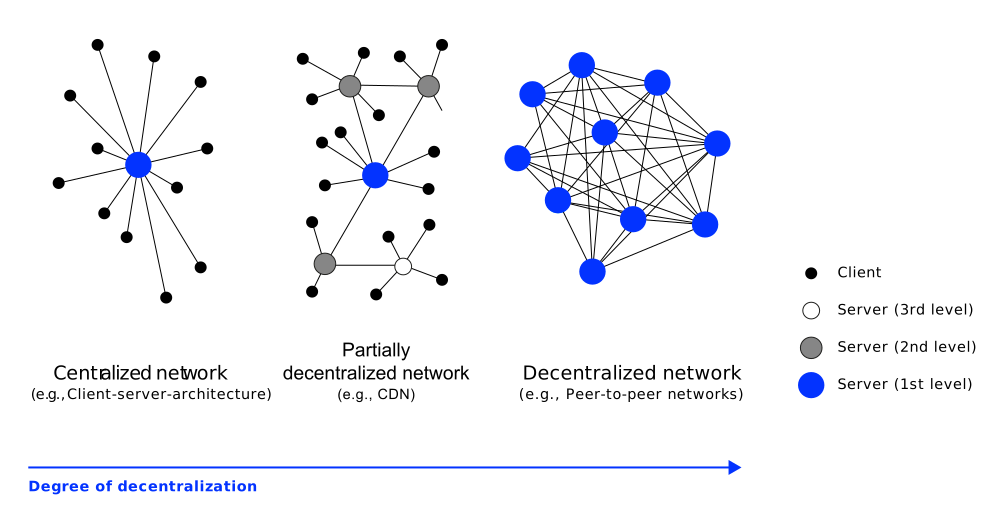
Distributed vs. decentralized systems
Both distributed and decentralized systems involve multiple nodes working together.
However, the key difference lies in how control and decision-making are managed.
Distributed systems can have a central coordinating authority, whereas decentralized systems distribute control and decision-making equally among all nodes.
Exercise
What specific distributed and/or decentralised systems are you familiar with?
Form small groups to discuss examples and work out key characteristics.
10:00
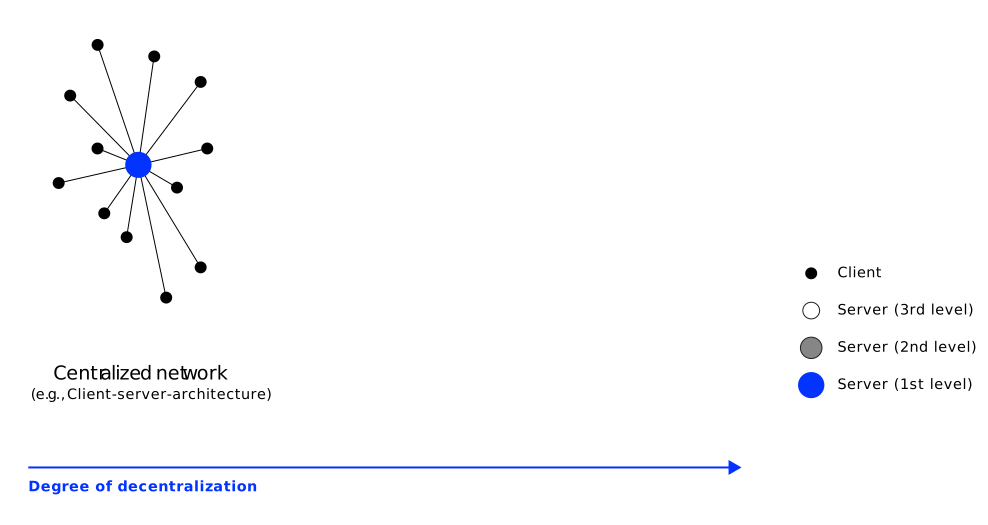
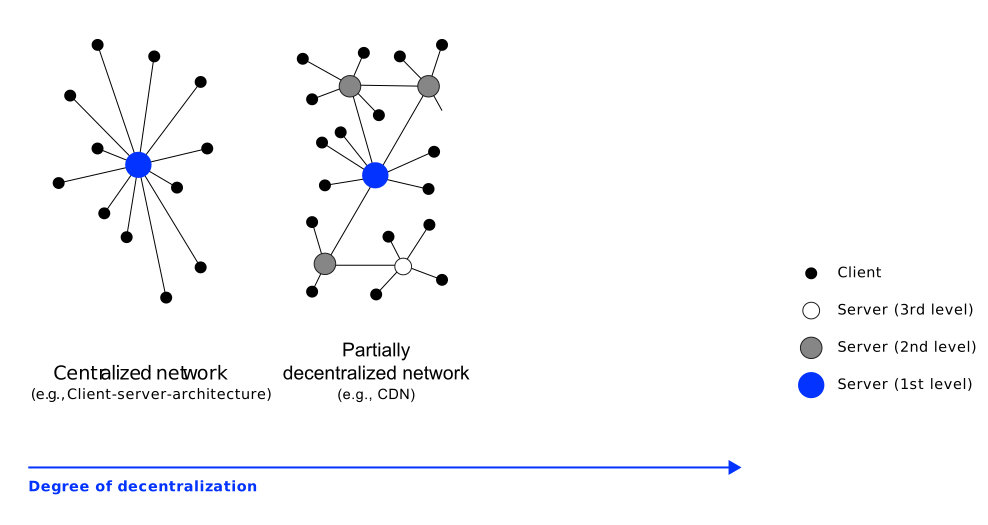
Degrees of decentralization
Distributed computing
Distributed computing refers to the use of distributed systems to solve computational problems—a problem is divided into many tasks, each of which is solved by one or more computers that communicate with each other.
Examples
Some notable examples and use cases of distributed computing:
Training neural networks, analyzing large-scale DNA sequences, climate modelling, performing large-scale risk assessments, and swarm robotics.
Summary
Distributed systems and distributed computing are integral to the advancement of emergent digital technologies as they they provide the necessary infrastructure for …
scalability and efficiency, fault tolerance and reliability, real-time processing, data privacy and security, and cost-effectiveness.
As digital technologies continue to evolve, the role of distributed systems will only become more critical in enabling innovative applications and services across various industries.
Excursus: The Decentralized Web
Problem statement
Discussion
Do developments like AI overview and AI mode in search worsen the problem?
What is your opinion regarding the problems and responses discussed in the Decoder episode “Google CEO Sundar Pichai on AI-powered search and the future of the web”?
Web 3.0
The decentralized web, often referred to as Web3, aims to restore the original decentralized nature of the internet.
Web3 is an evolving concept, which encompasses technologies broadly aimed at providing greater transparency, openness, and democracy on the web.
Discussion
If a decentralized web is the future,
what is the present and the past?
Evolution of the web
| Feature | Web 1.0 | Web 2.0 | Web 3.0 (Web3) |
|---|---|---|---|
| Focus | Information access and publishing | User-generated content and social interaction | Decentralization, user ownership, and machine understanding |
| User Role | Consumer of information | Content creator and consumer | Active participant and potential owner |
| Data Storage | Centralized servers | Centralized servers controlled by platforms | Potentially distributed storage using blockchains |
| Key Technologies | HTML, static web pages | Social media platforms, mobile web, APIs | Blockchain, cryptocurrencies, semantic web |
| Examples | Simple websites, directories | Facebook, YouTube, Wikipedia | Early stage |
Web 3.0 applications
Murray et al. (2023) propose that following four key applications could play a significant role in Web3:
Exercise
Is Mastodon a good example of the future of social media in Web 3.0?
Do a quick research on Mastodon to make up your mind if Mastodon is a good example for Web 3.0.
10:00
Example: Cloud Computing
Definition
Cloud Computing is a model which enables flexible and demand oriented access to a shared pool of configurable IT resources which can be accessed at any time and from anywhere via the Internet or a network.
Discussion
How do the characteristics of distributed systems apply to Cloud Computing?
Emergence
The arrival of the cloud computing era can be seen as an evolutionary development in the history of computing. It is the result of the progress of various technologies, such as:
Hardware
(e.g., virtualization)
Internet technologies
(e.g., web services)
Distributed computing
(e.g., networks, clusters)
Importance
Cloud computing provides the infrastructure that fuels the digital transformation.
Enabled by the Internet and distributed computing, cloud computing
- powers digital trends such as mobile computing, IoT, Digital Twins, and AI;
- accelerates industry dynamics and disrupts existing business models; and
- will continue to transform the world we live in on multiple levels and in various ways.
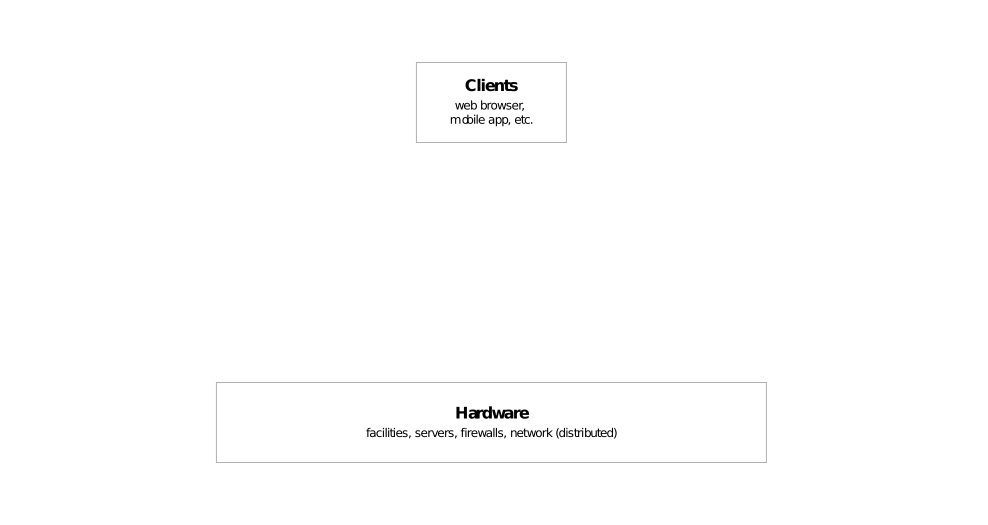
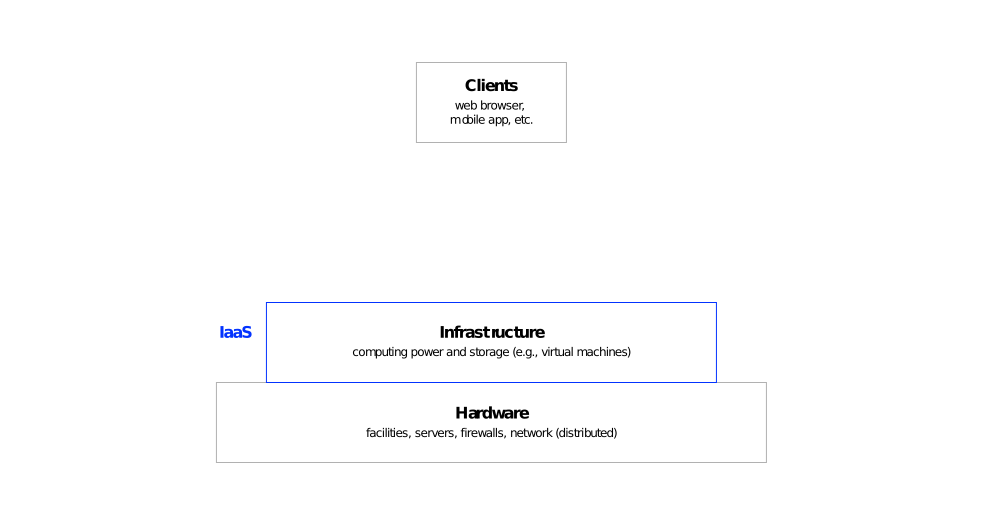
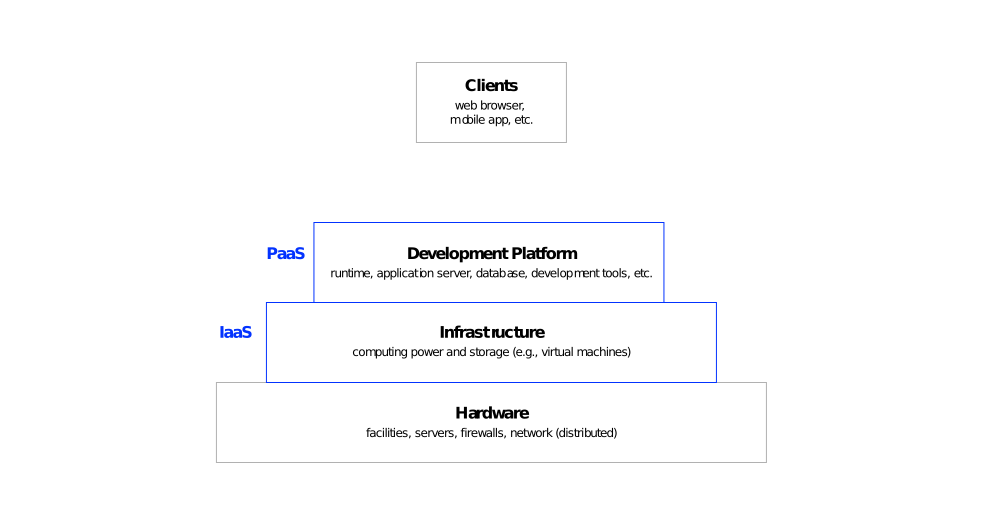
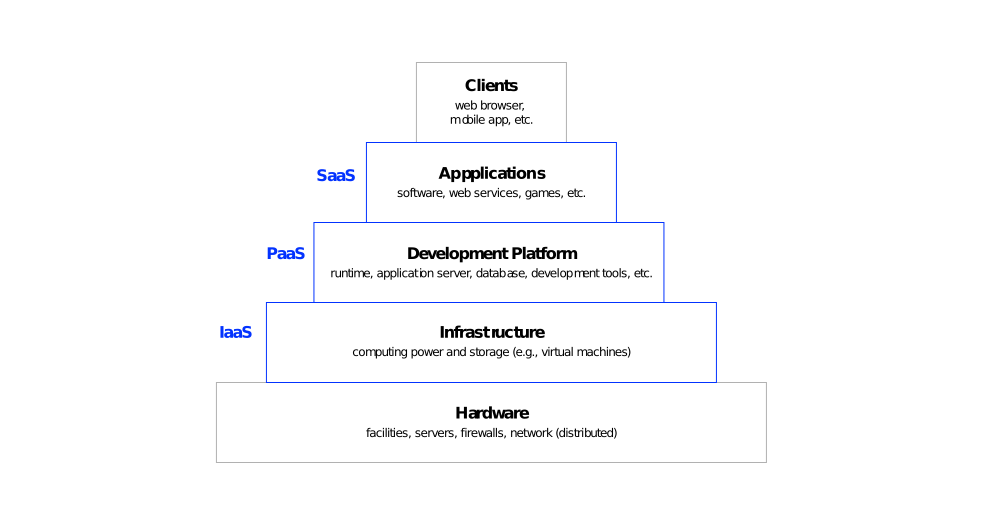
Cloud Computing stack
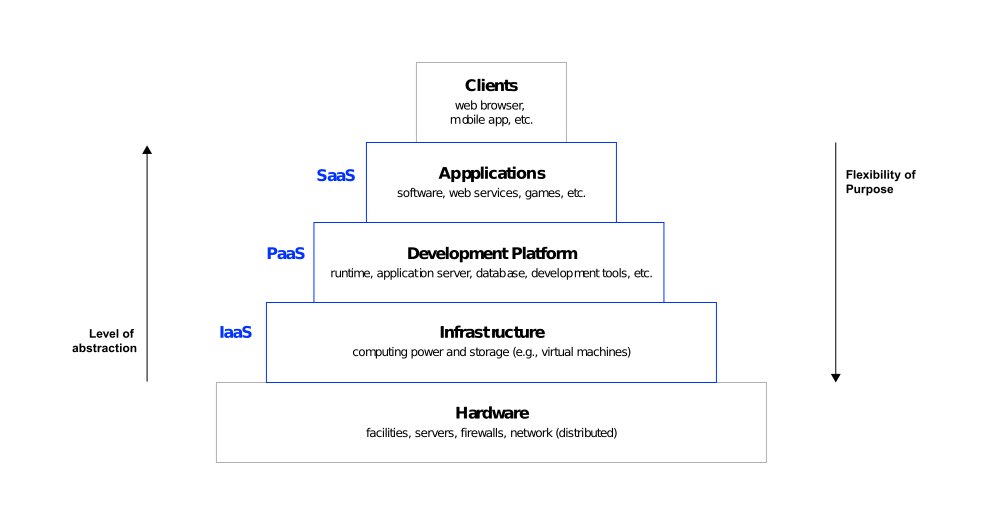
Unique characteristics of cloud services
Service-based IT resources, on demand self-service, ubiquitous access, multitenancy, location independence, rapid elasticity, and pay per use billing.
Advantages of cloud services
Due to its inherent characteristics, cloud computing enables persons and organizations to achieve diverse benefits and opportunities, such as
Low entry barriers, access to leading edge tech, focus on core capabilities, reduced time to market, greater flexibility, and enhanced cost-control.
Hot topics
Cloud computing powers digital trends such as
Cloud gaming,
AI as a service,
GAIA-X as well as
Fog and Edge Computing.
Exercise
Research on a hot topic
in cloud computing.
Form small groups, select either Cloud gaming, AI as a service, or GAIA-X, and
- find a definition,
- outline the challenge(s) that the topic aims to address,
- and list the key characteristics
15:00
Summary
Interconnectedness and distributivity are crucial aspects of cloud computing.
- Cloud computing relies heavily on interconnected networks. The internet, along with private networks, allows various cloud data centers, servers, and user devices to communicate and share resources seamlessly. This interconnectedness enables users to access cloud services and data from anywhere.
- Cloud services are rendered by distributed systems. Cloud storage, applications, and services run on a vast network of interconnected computers spread across data centers. These individual computers work together to provide unified services.
Q&A
Literature
Footnotes
Robustness refers to the a built in failure recovery mechanism that provides reliable end to end communication
Independency refers to the fact that there are no specific hardware and software requirements
The receiver responds with an positive acknowledgements (ACK) for ever data packet received, sender retransmits packets for missing ACKs after a given time
The internet as of today is often termed Web 2.0
Dominant internet players are the large platforms for e.g., social media, marketplaces, and CDN
The internet big five, also known as GAFAM, are Google, Amazon, Meta (formerly Facebook), Apple, and Microsoft
NFT stands for Non-fungible Tokens
DAO stands for Decentralized Autonomous Organizations