Introduction
Introduction to AI (I2AI)
Neu-Ulm University of Applied Sciences
February 20, 2025
Introduction
You x AI
Which thoughts and feelings come to your mind when you think of AI?
SciFi x AI
Fiction
or future?
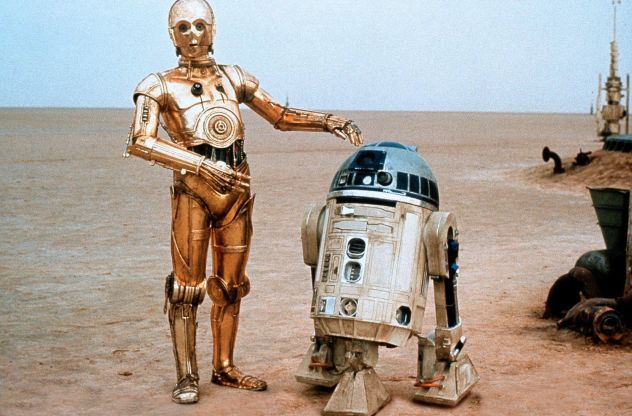
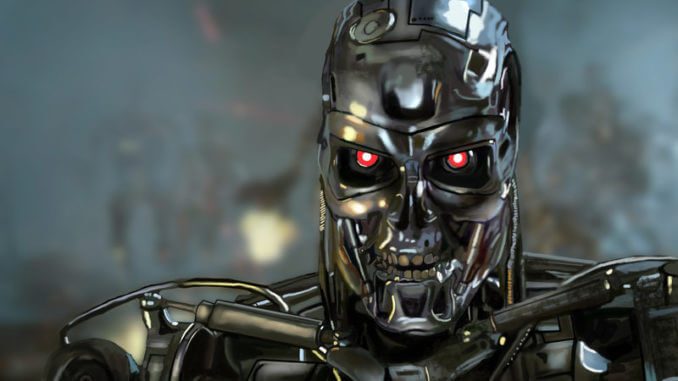


Quotes
The development of full artificial intelligence could spell the end of the human race. Stephen Hawking
I believe it’s going to change the world more than anything in the history of mankind — even more than electricity. Kai-Fu Lee
AI is neither magic nor monster — it is a mirror reflecting our own choices. Kate Crawford
Forget artificial intelligence—in the brave new world of big data, it’s artificial idiocy we should be looking out for. Tom Chatfield
Terms & definitions
Intelligence
What can intelligent beings do?
know learn
create
act predict plan decide
recognize assess infer percept
What is AI?
AI is the science of making machines (i.e., computer systems) to
think (thought processes and reasoning)
and to
act (behavior)
humanly and/or rationally
Think humanly
Cognitive science is the study of the human brain and its processes — it examines how the human brain may be functioning. Cognitive science requires analytical observation and experimentation.
We can learn about human thought in three ways (Russel & Norvig, 2022):
- introspection (trying to catch our own thoughts as they go by)
- experiments (observing a person in action)
- brain imaging (observing the brain in action)
As a result of the cognitive modelling approach, some of the most powerful AI models are a result from observing human thinking experimentally (e.g., deep neural networks).
The measurement problem
Why is “thinking like a human” so difficult to measure?
In his famous paper “What Is It Like to Be a Bat?”, Thomas Nagel (Nagel, 1974) argues that consciousness has a subjective character that cannot be captured by physical descriptions. We might map the neurons of a bat (or an AI), but we cannot know the experience of being one.
Rationality
What is rational thinking about?
Think rationally
Thinking rationally means following the laws of thought (i.e., rules for correct reasoning) — if your premises are true, your conclusion must be true.
Socrates is a man and all men are mortal, thus, it can be concluded that Socrates is mortal Aristotle (384-322 BCE)
These rules can be encoded — computers can solve any solvable problem, provided:
- we can describe objects in the world (“Socrates is a man”),
- we can describe relationships between them (“all men are mortal”), and
- there is enough computing power available
Act humanly
Many AI systems try to mimic human behavior — and the Turing Test (Turing, 1950) offers one way to measure how “intelligent” they are in this sense: a machine passes if it can fool a human into thinking it’s human.1
To pass, a machine would need to:
- understand and produce language (natural language processing)
- remember facts and context (knowledge representation)
- reason and draw conclusions (automated reasoning)
- learn and adapt (machine learning)
Think you can tell humans from bots? Try it yourself — “Bot or Not”
Your thoughts
Are you able to discern Claude (Sonnet 4.6) from a human?
Why (not)?
Large language models in general, have the ability to produce human-like responses that can fool even experienced evaluators ChatGPT has shown it can. However, depending on your prompting skills, those models may still produce a lot of nonsense.
Act rationally
An agent is something that acts, an rational agent is one that acts so as to achieve the best coutcome (i.e., does the right thing), or, when there is uncertainty, the best expected outcome (i.e., does the appropriate thing) based on the objective that is provided to the agent (Russel & Norvig, 2022).
The approach goes beyond the “laws of thought” approach as it involves actions based on
- inference (deducing that a given action is the best and then to act on this conclusion) and
- other mechanisms such as reflex (when speed is more successful than careful deliberation that takes some time)
Standard model of AI
The standard model of AI (Russel & Norvig, 2022) describes the dominant approach in AI engineering: build systems that get increasingly better at achieving a fixed goal — one precisely defined by humans in advance.
But is that enough?
Discussion
Do you see any issues with the so-called standard model of AI?
Benificial machines
To create machines that are provably beneficial to humans, two refinements to the standard model of AI are needed:
- The ability of any agent to choose rational actions is constrained by the computational untractability of doing so (Russel & Norvig, 2022).
- An intelligent agent should not pursue a definite object, it should pursue objectives that benefit humans, while being uncertain as to what they are (Russel & Norvig, 2022).
Definition of the EU
‘AI system’ means a machine-based systems designed to operate with varying levels of autonomy and that may exhibit adaptiveness after deployment and that, for explicit or implicit objectives, infers, from the input it received, how to generate output such as content, predictions, recommendations, or decisions, that can influence physical or virtual environment (European Commission, 2024).
Systems that perceive, learn, think and act human-like.
Types of AI matter
Casual discussions often suffer “conceptual flattening” (Chalmers et al., 2026): treating all AI as one thing obscures fundamentally different logics and affordances.
| AI Mode | Core Logic | Representative Systems | Organizational Affordances |
|---|---|---|---|
| Predictive | Pattern recognition & forecasting | Fraud detection, Radiology classifiers | Efficiency in routine analysis; surveillance |
| Generative | Synthetic production of novel content | GPT-4o, Midjourney, GitHub Copilot | Shift from production to curation; low marginal cost |
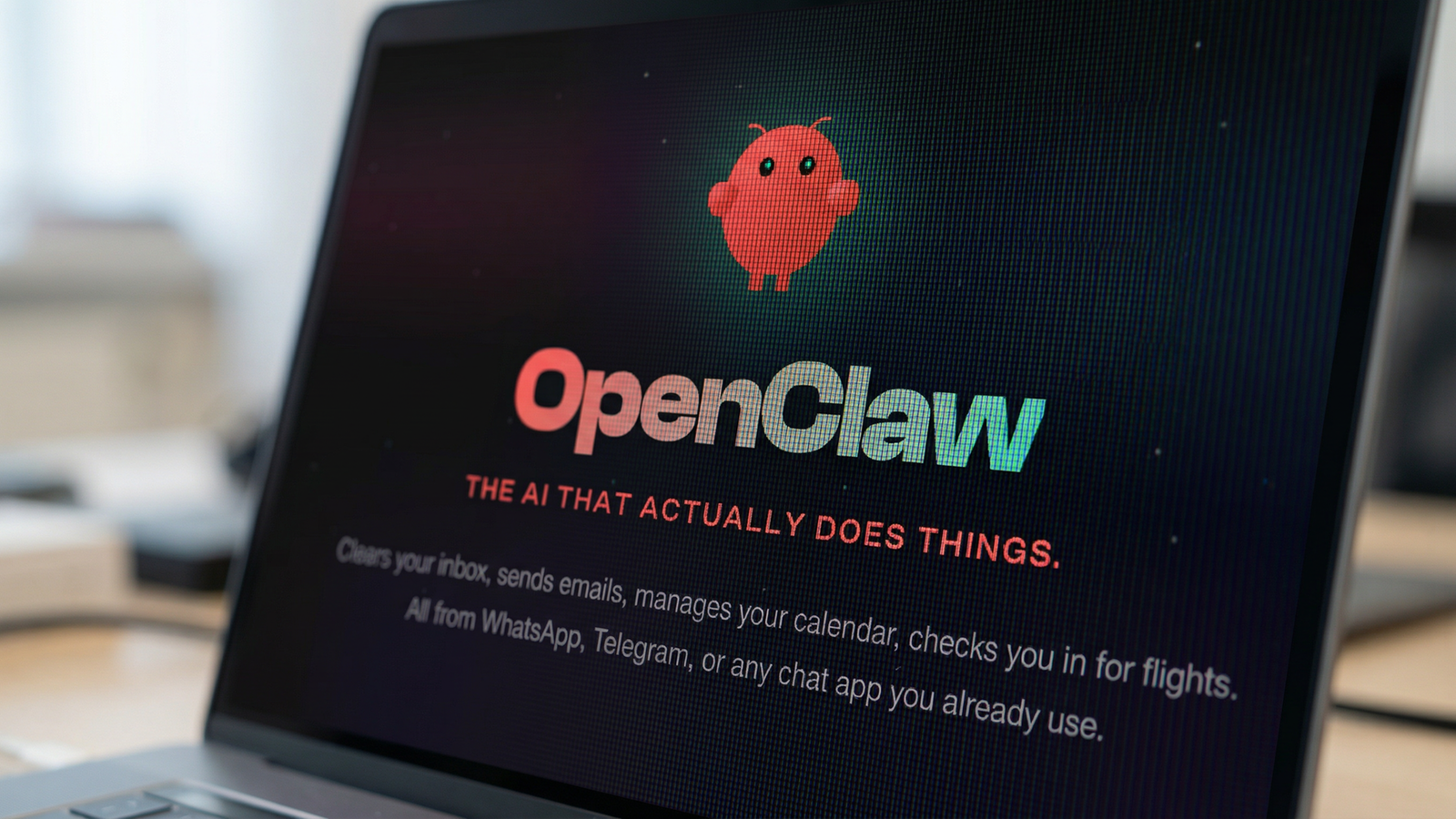
| Agentic | Multi-step reasoning & task decomposition | LangChain agents, Open Claw | Partial autonomy; cognitive sovereignty |
| Embodied | Physical manipulation & perception | Agility Robots | Labor substitution; material coordination |
The history of AI
The Thinking Machine
A series of interviews to some of the AI pioneers.
The full documentary is available here
GPT’s great-grandfather
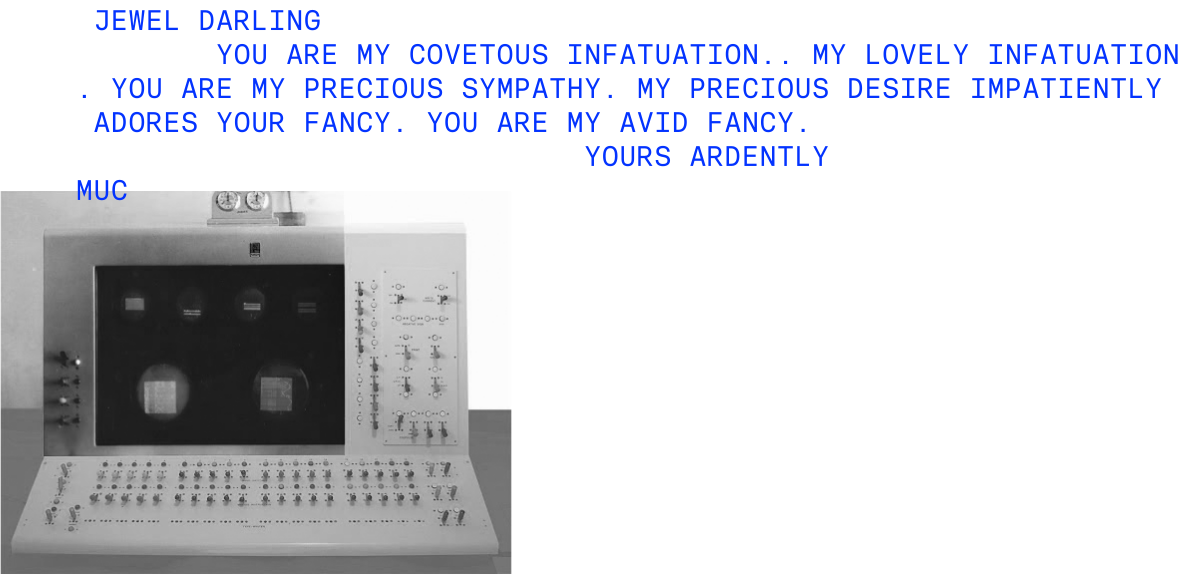
A brief AI-timeline
1943—1956 The inception of AI
- 1943: McCulloch & Pitts: Boolean circuit model of brain (artificial neurons with on and off states; all logical connectives can be implemented with some network of these)
- 1950: Turing’s “Computing Machinery and Intelligence” (Turing (1950) already introduced the Turing test, machine learning, genetic algorithms, and reinforcement learning)
- 1950s: Early AI programs (e.g., Arthur Samuel’s influential checkers program that learned to play at a strong amateur level)
1966—73 A dose of reality (AI winter)
- The early AI programs failed on more difficult problems
- Focus on “informed introspection” as to how humans perform a task
- Lack of appreciation of the intractability of many of the problems
- Signification reduction of government funding of AI research
1970—90 Expert systems (knowledge-based approaches)
- 1969—79: Early development of knowledge-based systems (rule-based heuristic algorithms)
- 1980—88: Expert systems industry booms (nmany U.S. corporates had their own AI groups)
- Soon after that came the “AI winter” (difficulties to build expert systems for complex domains due to uncertainty and a lack of learning)
1990—present AI spring (statistical approaches)
- Focus on probabilistic reasoning (rather than Boolean logic) and machine learning
- Reunification of subfields such as computer vision, robotics, speech recognition, and natural language processing
2012—present New excitement
- Advances in computing power, WWW, and very large data sets
(e.g., IBM Watson’s victory in Jeopardy!) - AI is accessible to many as it enters productivity tools (e.g., ChatGPT, Microsoft Co-Pilot)
New excitement
Improvement in performance obtained from increasing the size of the data set by two or three orders of magnitude outweighs any improvement that can be obtained from tweaking the algorithm Banko & Brill (2001)
- Deep learning systems offer significant performance gains
(e.g., AlphaGo’s victories) - Significant focus on AI in academia and industry
- Breakthrough of generative AI (e.g., ChatGPT)
- AI systems find increasing application in the real world (e.g., robotic vehicles, machine translation, speech recognition, recommendations, autonomous planning, game playing, image understanding, medicine)
Agentic AI
Your experiences
Which AI systems are you using?
Q&A
Exercises
The exercises are (inspired) by Russel & Norvig (2022)
Concepts
Define in your own words:
- intelligence
- artificial intelligence
- agent
- rationality
- logical reasoning
Instances of AI
If and to what extent are the following computer systems instances of artificial intelligence?
- Supermarket bar code scanners
- Web search engines
- Voice-activated telephone menus
- Internet routing algorithms that respond dynamically to the state of the network
AI Contests
Various subfields of AI have held contests by defining a standard task and inviting researchers to do their best. Examples include the DARPA Grand Challenge for robotic cars, the International Planning Competition, the Robocup robotic soccer league, the TREC information retrieval event, and contests in machine translation and speech recognition.
Investigate one of these contests and describe the progress made over the years.
- To what degree have the contests advanced the state of the art in AI?
- To what degree do they hurt the field by drawing energy away from new ideas?
Statements
Read the statements (one after the other) and discuss if the second sentence of each statement is true and if it does imply the first.
Surely computers cannot be intelligent
—they can do only what their programmers tell them.
Surely animals cannot be intelligent
—they can do only what their genes tell them.
Surely animals, humans, and computers cannot be intelligent
—they can do only what their constituent atoms are told to do by the laws of physics.