What is Theory
Research Project 1 (RP1) — U5
Neu-Ulm University of Applied Sciences
September 3, 2026
Opening Remarks
Recognising Theory
A theory is a general and abstract account of something.
Learning Outcomes
By the end of this unit, you will be able to:
- Distinguish a genuine theory from data, description, hypotheses, or a model, and identify which of Gregor’s five types a given theoretical claim belongs to.
- Name a theory’s constructs, propositions, logic, and boundary conditions, and use boundary conditions to judge where the theory’s validity actually holds.
- Decide which theory type your own research question needs, and which type a given review is positioned to produce.
Concepts
What Do You See?


Definition
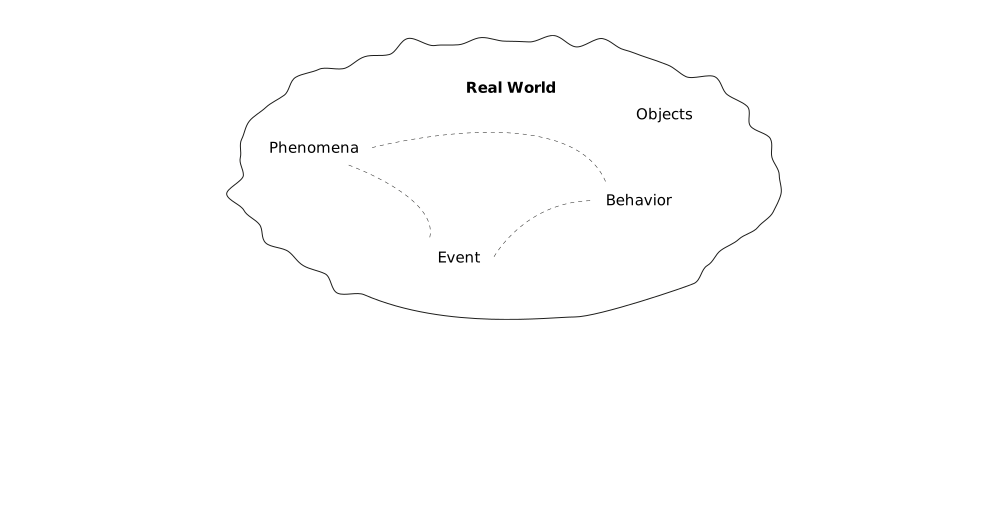
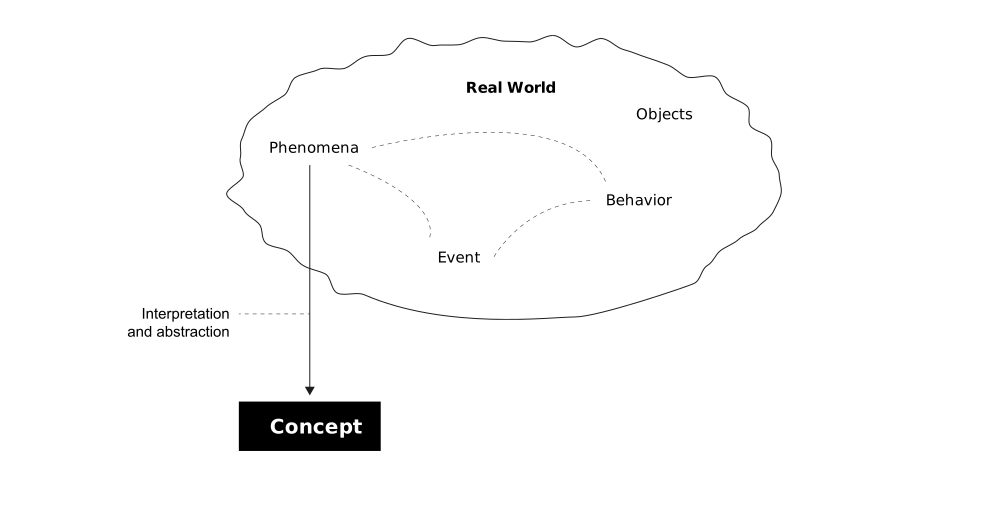
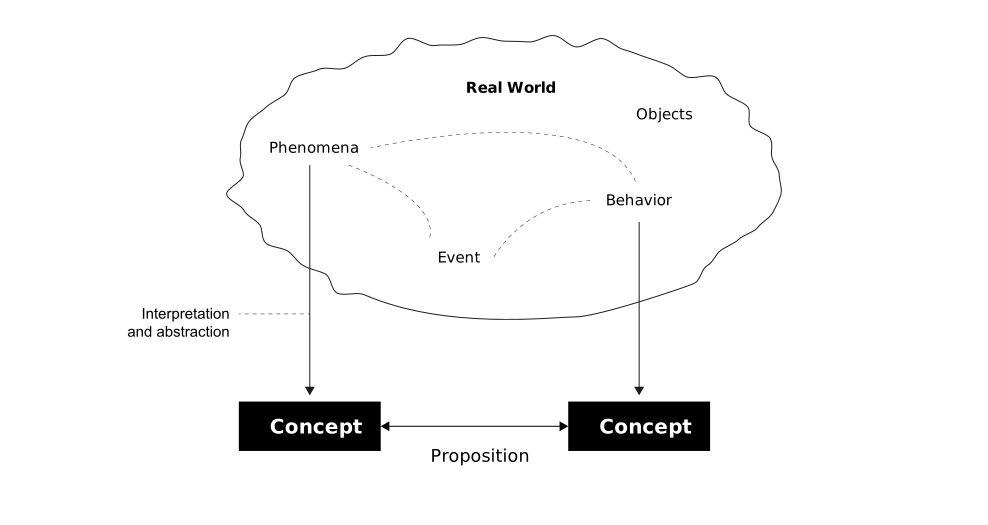
A concept is an abstract idea, notion, or mental representation that represents a specific category of objects, events, behaviors, or phenomena (Podsakoff et al., 2016).
Concepts are fundamental to human cognition and communication and to research in particular.
Visualization
Guidelines
Podsakoff et al. (2016) propose a set of recommendations for creating better concept definitions:
clear and precise,
differentiated,
explicit &
theoretically founded
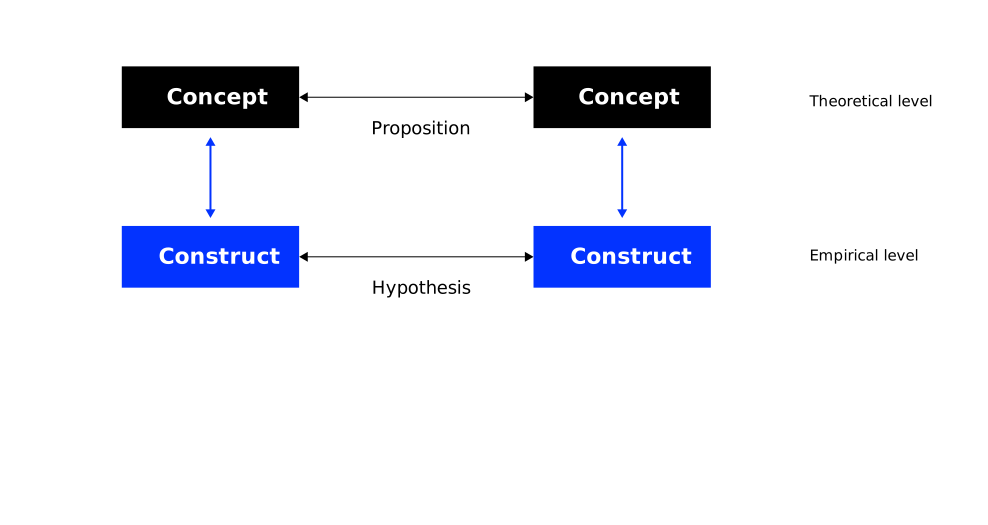
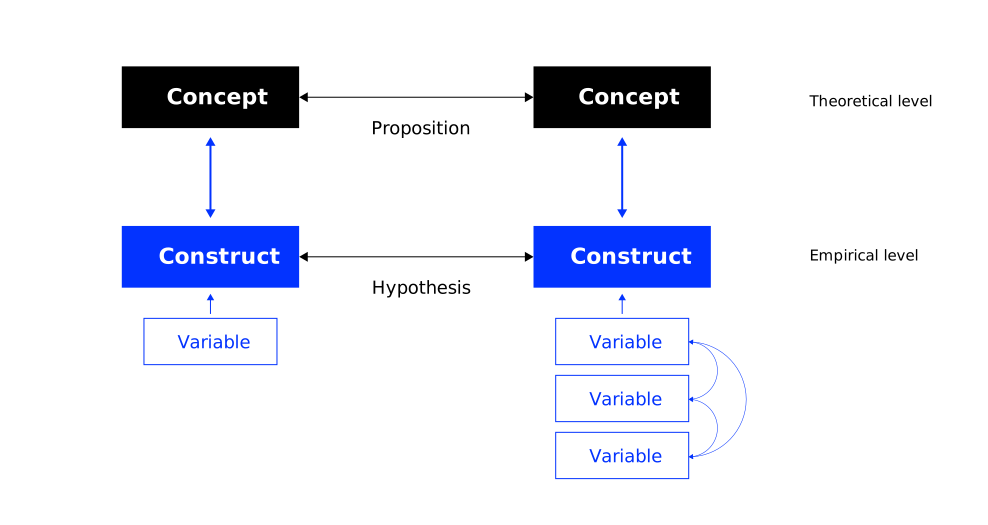
Operationalization
Theory
A theory is a general and abstract account of something.
Definition
Sutton & Staw (1995) define theory as a comprehensive framework that goes beyond simple descriptions, hypotheses, data, or metaphors. A true theory provides a systematic and explanatory understanding of a set of phenomena, offering insights into the underlying mechanisms and causal relationships.
- Theory is about the connections between phenomena, a story about why actions, events, structures, and thoughts occur.
- Theory emphasizes the nature of causal relationships by determining what occurs first and the timing of such events.
- Theory delves into the underlying processes to understand the systematic reasons for a particular event or non-event.
- Theory is usually accompanied by a series of convincing and logically coherent arguments.
Common Misconceptions
Sutton & Staw (1995) argue that theory is often misunderstood and misused in academic and scholarly contexts. They provide a clear distinction between what theory is and what it is not:
Universal, data, descriptive, hypotheses, models, design
Function
Theories guide and give meaning to what we see.
- Help to organize relevant empirical facts (i.e., what can be observed and measured) to provide description, explanation, or prediction of phenomena.
- Allow us to generalize from “the known” to “the unknown.”
Scientific Theories
According to Bacharach (1989), a scientific theory
- helps us to synthesize prior empirical findings and to reconcile contradictory findings by discovering contingent factors;
- can be empirically tested using scientific methods;
- needs to be able to be falsified, but not necessarily to be proven positive;
- offers guidance for future research by helping identify constructs (reflecting concepts) and hypotheses (relationships between the constructs);
- contributes to cumulative knowledge by bridging gaps between theories and causing existing theories to be re-evaluated.
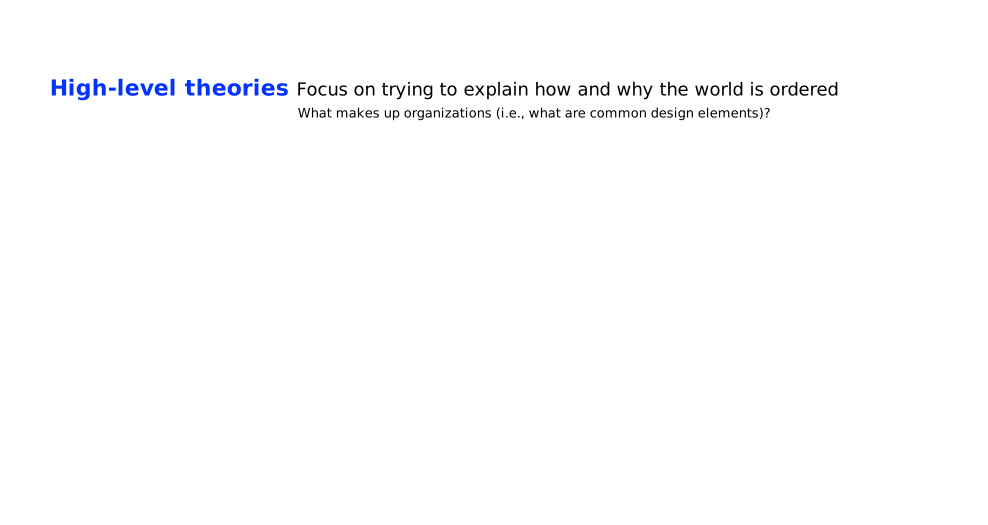
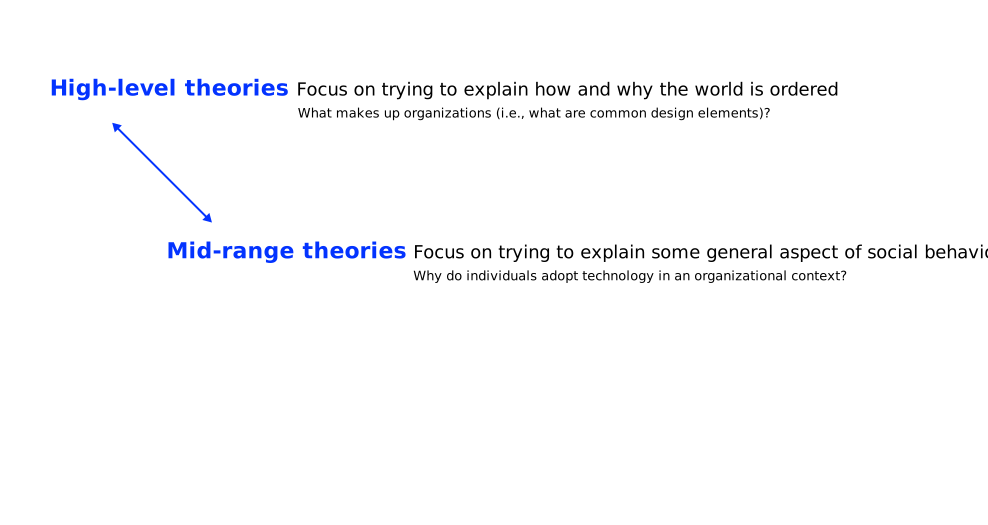
Levels of Theory
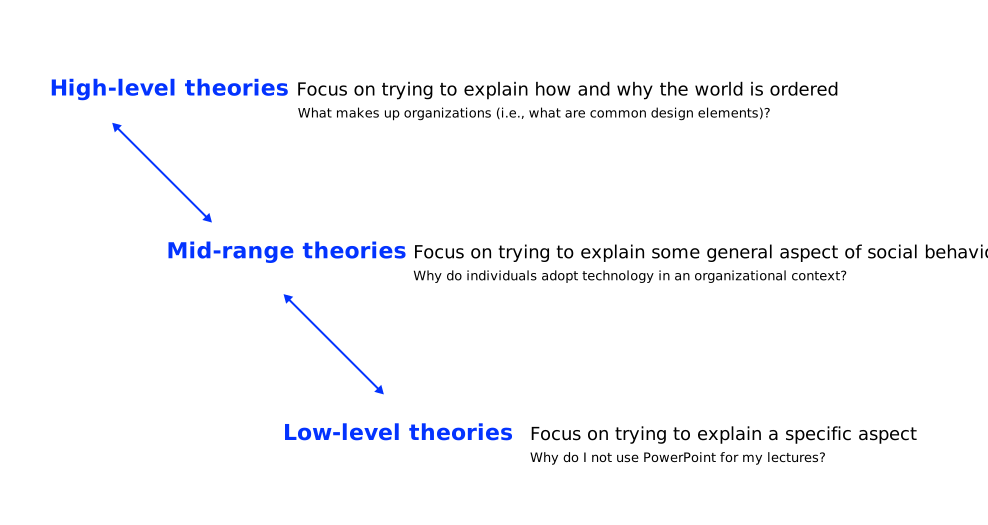
Types of Theory
Analysis
Explanation
Prediction
Explanation & prediction
Design & action
Known Theories
Building Blocks
Concepts and Constructs
The “what” of theories.
- A construct is the operationalization of a concept that is chosen to explain the phenomenon (Podsakoff et al., 2016).
- Constructs must have a clear and unambiguous operational definition that specifies exactly how the construct will be measured and at what level of analysis (individual, group, organizational, etc.).
- The constructs included in a theory must be equally comprehensive and parsimonious, all relevant concepts are included, but only those that enhance understanding (Whetten, 1989).
Propositions and Hypotheses
The “how” of theories.
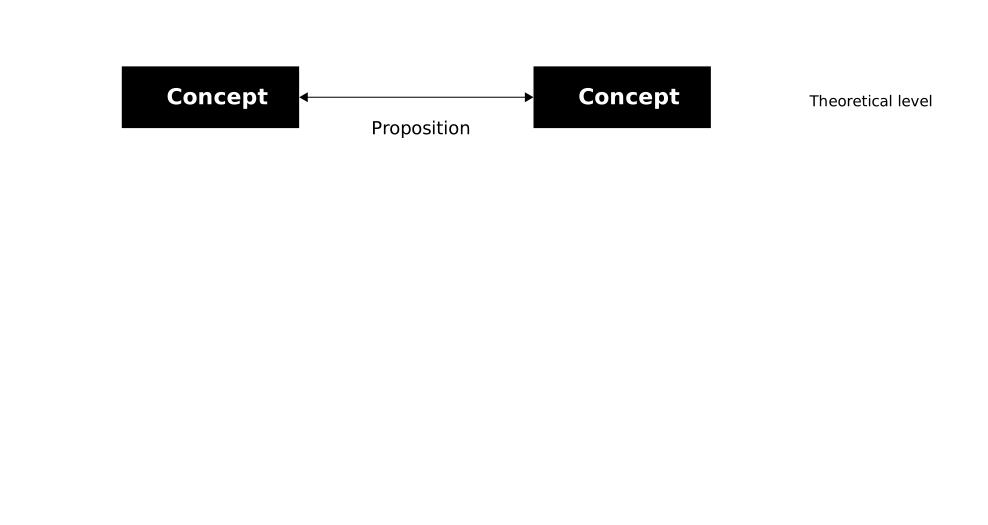
Propositions are associations postulated at the theoretical level (they relate concepts), hypotheses are tested at the empirical level (they relate constructs) (Whetten, 1989).
- Propositions are stated in declarative form and should ideally indicate a cause-effect relationship (e.g., if X occurs, then Y will follow).
- Propositions may be speculative but must be testable, and should be rejected if they are not supported by empirical observations.
Nomological Nets
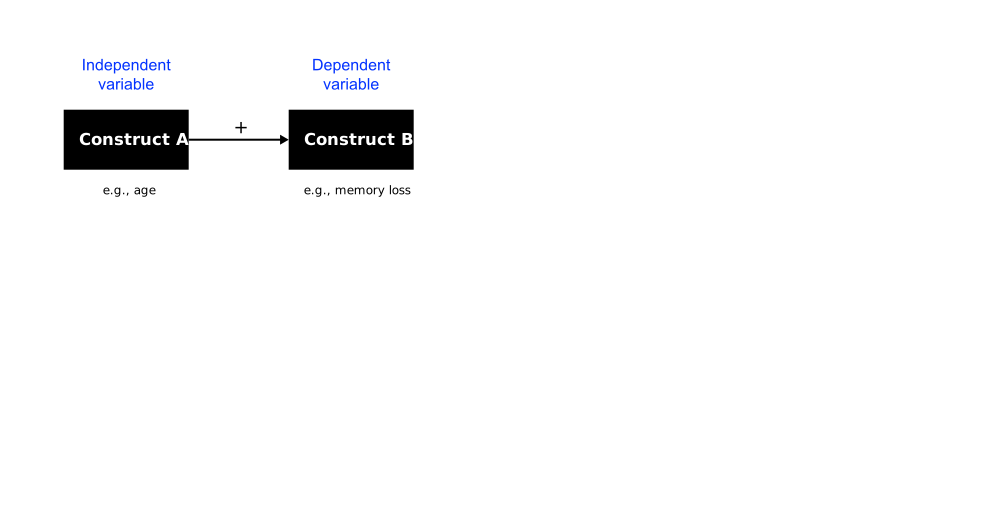
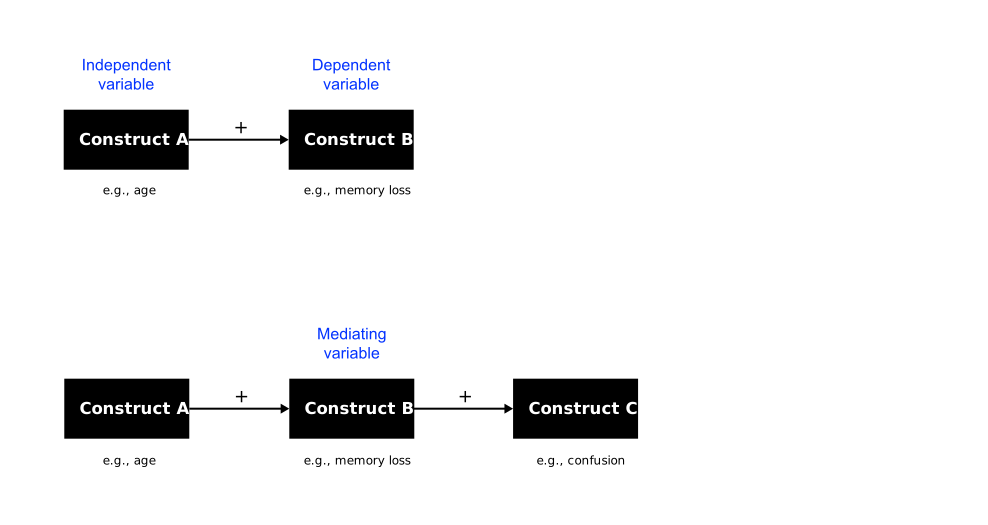
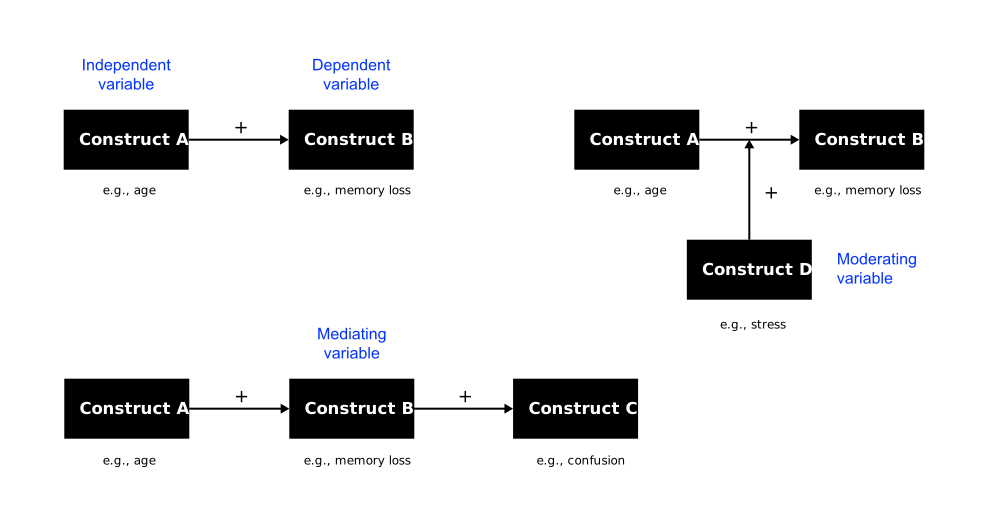
Logic
The “why” of theories.
The logic provides the basis for justifying the propositions as postulated (Whetten, 1989).
- Acts like a “glue” that connects the theoretical constructs and provides meaning and relevance to the relationships between these constructs.
- Represents the “explanation” that lies at the core of a theory.
Without logic, propositions are ad hoc, random, and meaningless.
Boundary Conditions
The constraints of theories.
- Assumptions about values, time, and space that govern where the theory can be applied and where it cannot, the boundaries of generalizability (Whetten, 1989).
- If a theory is to be properly used or tested, all its implicit assumptions must be properly understood (cultural, temporal, or spatial assumptions).
- Although it is important to consider potential constraints through theory development, these boundaries are usually discovered through subsequent tests.
Conclusion
Just as a collection of words does not make a sentence, a collection of constructs and variables does not make a theory. Bacharach (1989, p. 496)
Example
Technology acceptance
Problem Statement
Phenomenon
- Firms heavily invest in IT applications to improve organizational performance.
- There are often low financial returns on IT investments.
- IT applications need to be used to improve performance.
- Understanding user acceptance of new IT is of high importance.
Research aim
Providing an explanation of IT acceptance
Contribution
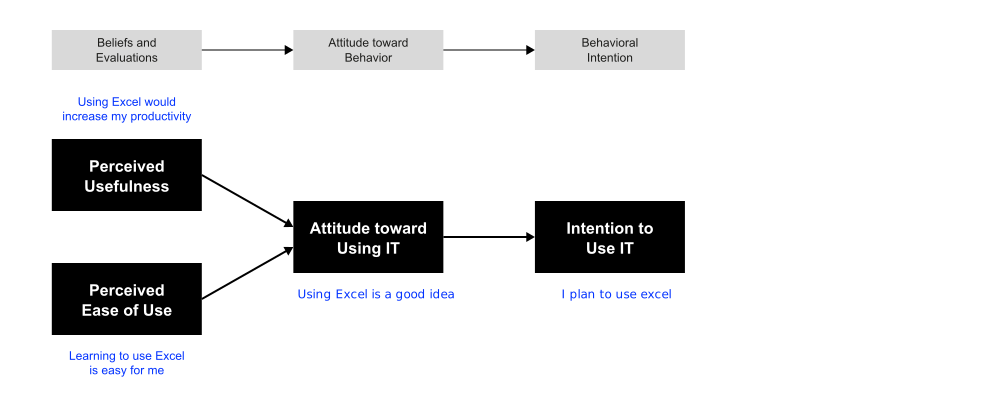
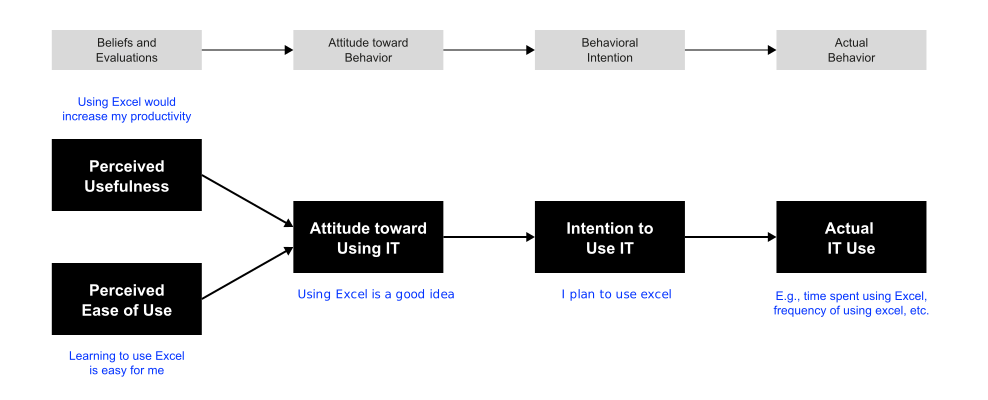
The Technology Acceptance Model (TAM) (Davis, 1989)
Theoretical Basis
Theory of Reasoned Action (TRA), an established theory in psychology used to understand an individual’s behavior (Ajzen, 1985).
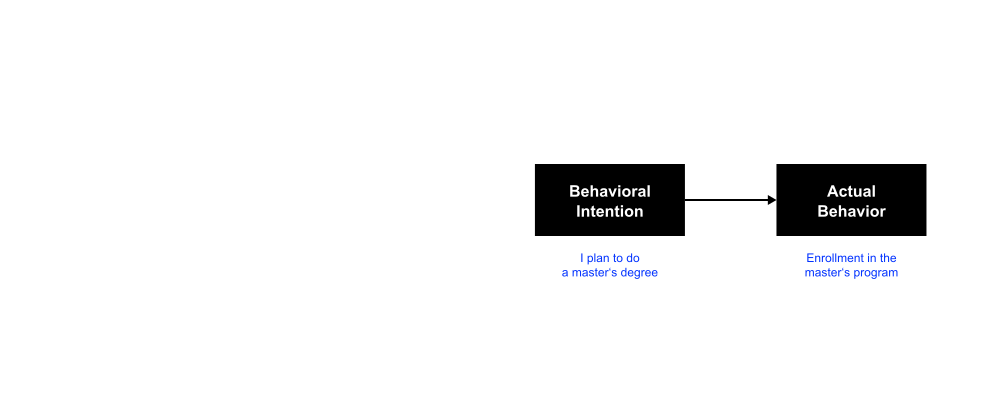
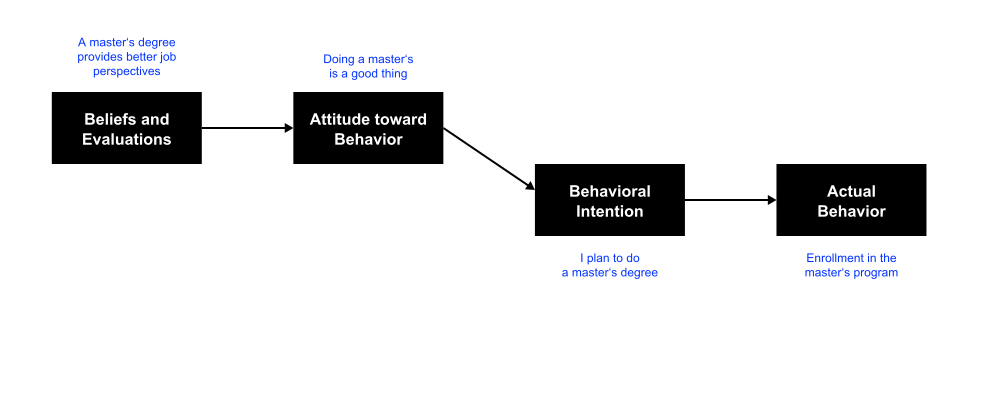
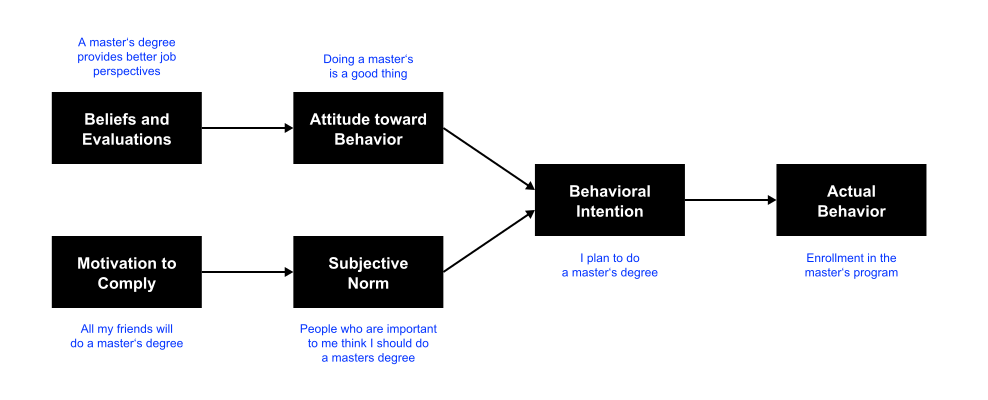
Technology Acceptance Model
The Technology Acceptance Model (TAM) (Davis, 1989) translates the key tenets of TRA into the IT acceptance domain, except for subjective norms.
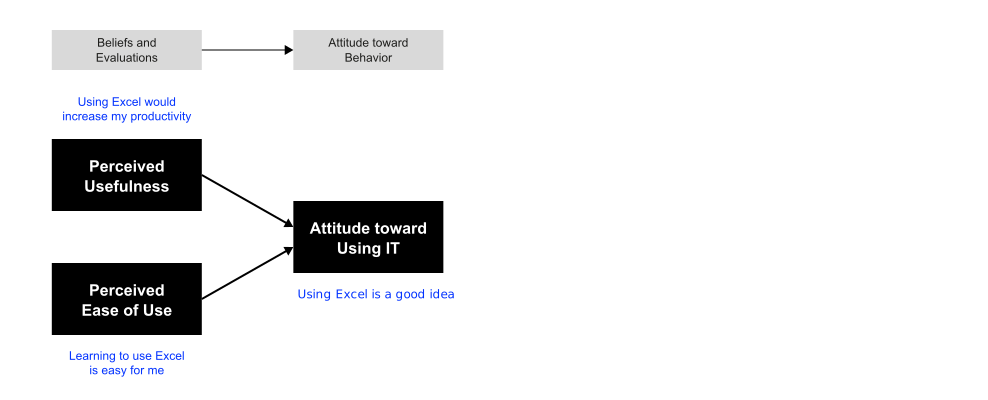
Exercise
Form small groups, research the Unified Theory of Acceptance and Use of Technology (UTAUT) (Venkatesh et al., 2003), and try to understand how it relates to TAM.
- What (constructs) does it add?
- How (relationships) do they connect?
- Why (justification), and who, where, when (boundary conditions)?
Theory-Review Alignment
Which theory type does your question need, and which will your review produce?
Gregor’s five types function as a decision tool for the review you are about to design:
- “What is X?” (analysis or explanation: synthesize existing conceptualizations)
- “How does X affect Y?” )explanation and prediction: surface competing causal mechanisms)
- “How should we design for X?” (design and action: synthesize design principles, not causal claims)
Homework
Bring one candidate theoretical lens to the next session.
For the tension your team has chosen to pursue, identify one theory, model, or framework that might explain it, from your own reading so far, not necessarily from a full literature search yet.
- Which of Gregor’s five types is it (analysis, explanation, prediction, explanation and prediction, or design and action)?
- What are its constructs (the what), its propositions (the how), and its logic (the why)?
- What boundary conditions would you expect it to have, and does your team’s context fall inside or outside them?