IS/IT Strategy

Strategy and Performance Management

Andy Weeger

Neu-Ulm University of Applied Sciences

January 12, 2026

Learning outcomes

After this session, you should have a solid understanding of

  • different perspectives of IS strategy,
  • the interactions of IS strategy and business strategy,
  • the scope, contents, structure of an IS strategy and other deliverables,
  • the process to identify investment priorities, and
  • critical success factors for crafting and implementing IS strategies.

Prologue

The strategic CIO

To be truly strategic, CIOs need to think about how value is created. Many are good at cost-cutting, but this is almost by definition a backward looking exercise—optimizing something that is already in place. This is not strategic. CIOs need to think about what future possibilities there are to leverage technology for new value and top-line growth. This is what differentiates the strategic CIO. Peter High, Author of “Implementing World Class IT Strategy”

Reflection

What is an IS/IT strategy?

Ideally, you should be able to answer based on your reading of Chen et al. (2010).

Definition

Conceptions in literature

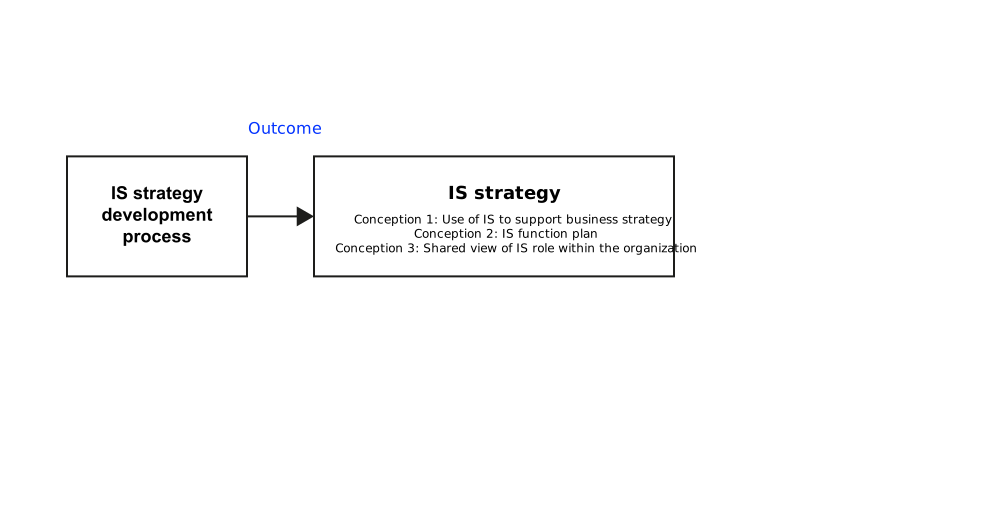
Chen et al. (2010) identified three conceptions of information systems (IS) strategy in IS literature:

  1. IS strategy as the use of IS to support business strategy
    (position — how can IS be used to support the intended position?;
    business-centric; part of business strategy; a priori alignment)
    ;
  2. IS strategy as the master plan of the IS function
    (plan — what IS assets are required and how to allocate the existing ones efficiently?;
    IS-centric; functional-strategy; ex post alignment)
    ; and
  3. IS strategy as the shared view of the IS role within the organization
    (perspective — what is our view towards IS in the organization?;
    organization-centric; organizational-level strategy; dynamic alignment)
    .

Definition

Conceptions 1 and 2 either subordinate IS strategy to business strategy or reduce it to functional planning. Only the third conception positions IS strategy as a distinct organizational-level construct.

IS strategy refers to the organizational perspective on the investment in, deployment, use, and management of IS. (Chen et al., 2010, p. 237).

The intended impact of IS/IT strategy1 is to provide a shared understanding across the organization to guide subsequent IS/IT investment and deployment decisions.
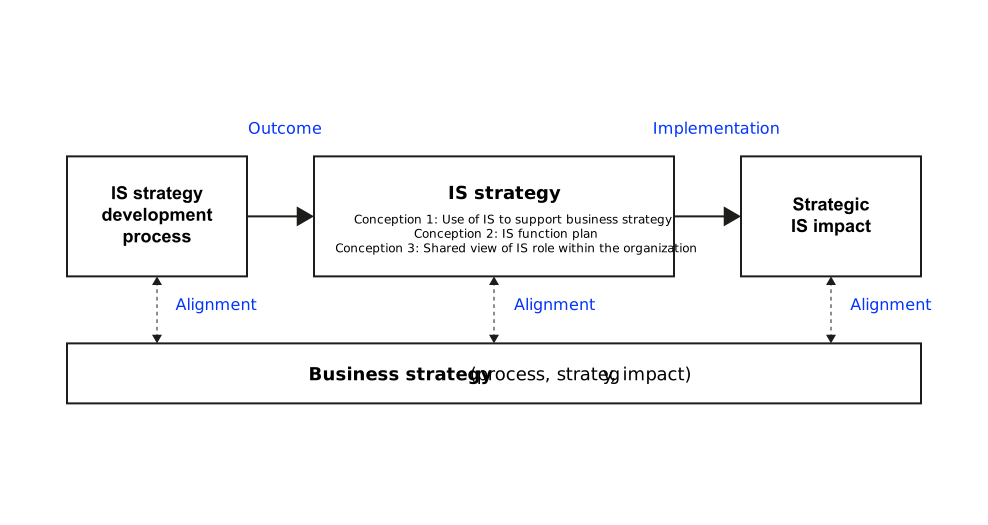
Conceptual framework

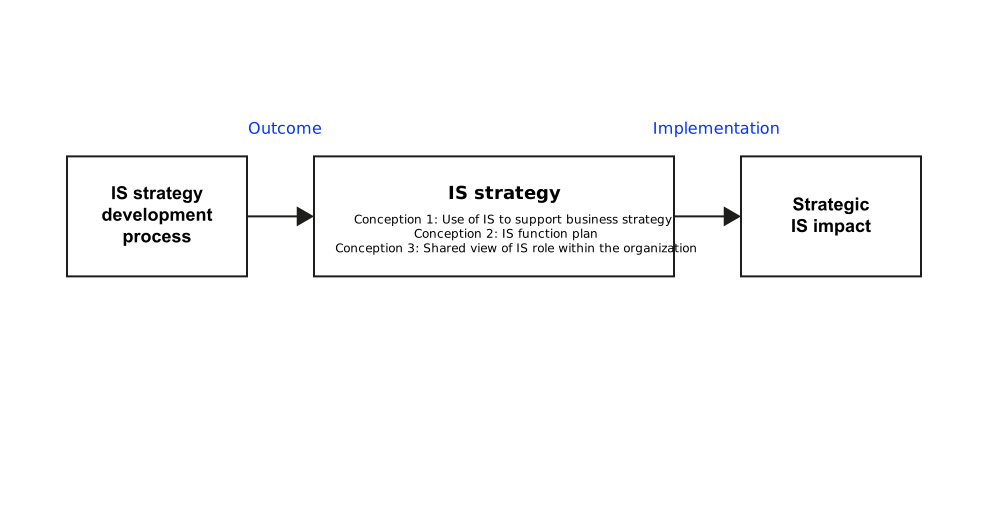
Based on Chen et al. (2010)’s framework of IS strategy


Process

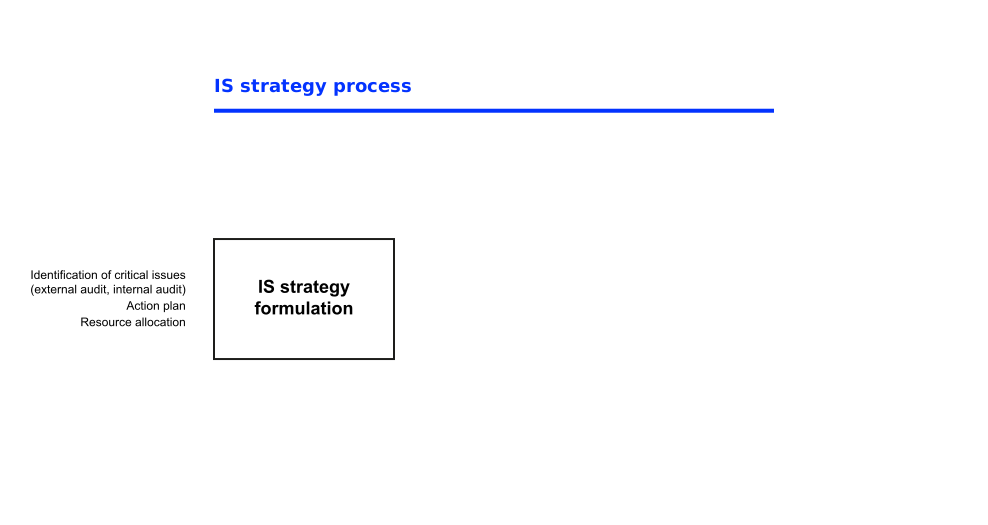
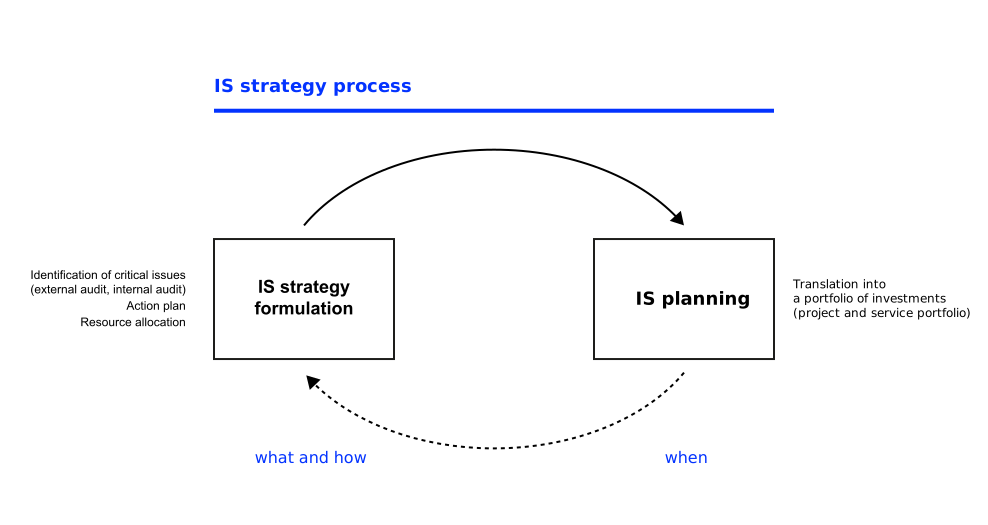
The IS strategy process

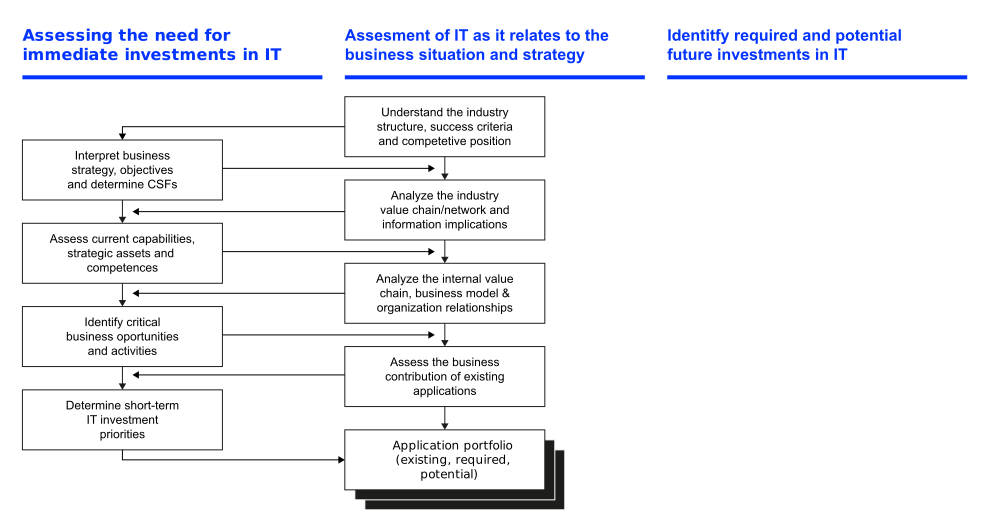
The IS strategy process, based on Peppard & Ward (2016)


Strategy formation

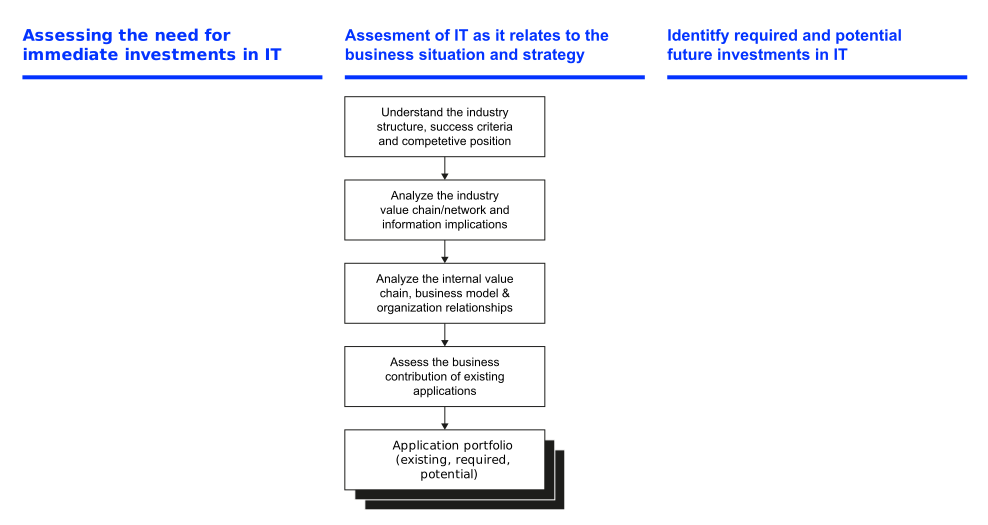
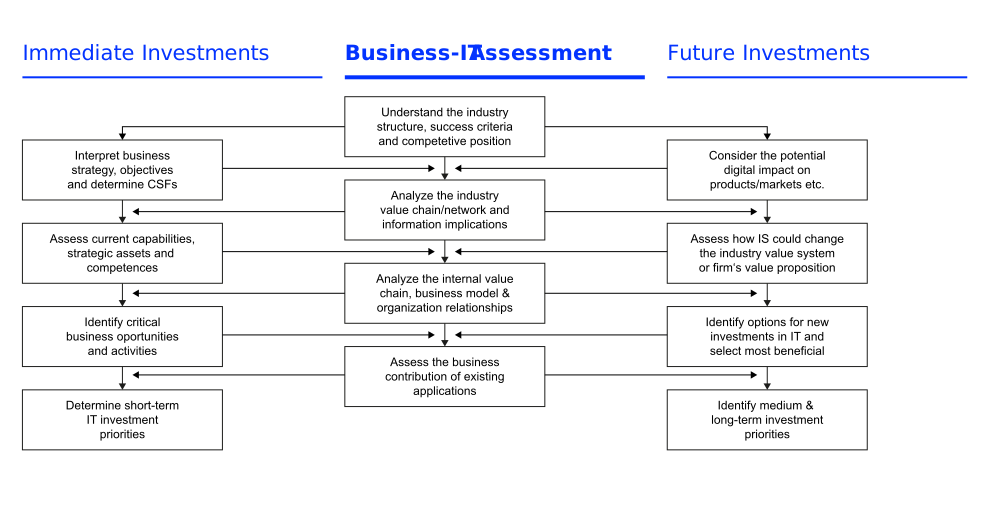
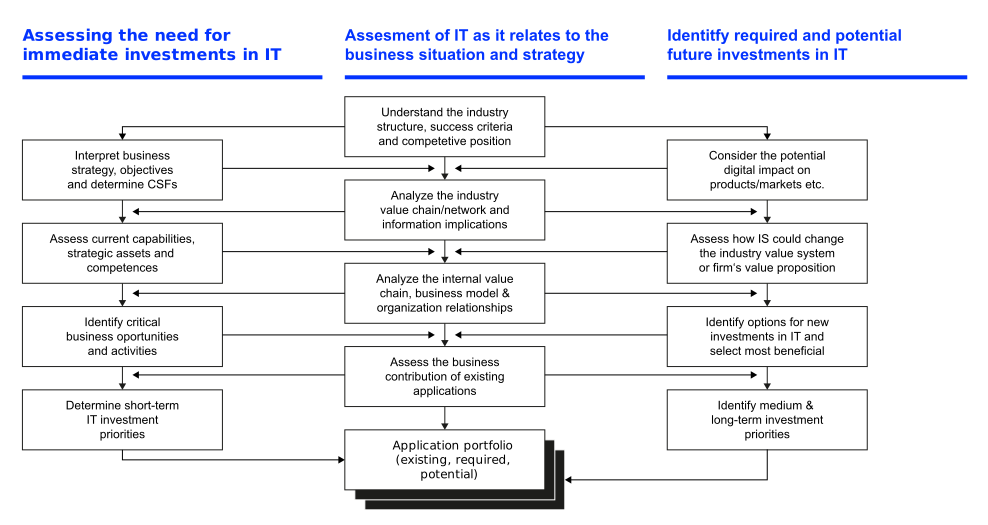
Framework to identify critical issues/fields of action based on Peppard & Ward (2016)


Exercise

Scenario: You are the IT steering committee of MediPharm AG, a mid-sized German pharmaceutical distributor supplying hospitals and pharmacies. The company operates 5 regional warehouses and employs 800 people. Recent challenges include new competitors offering same-day delivery, increasing regulatory requirements for drug traceability, and pressure from customers to digitize ordering processes.

  • Have a look at the IT/IS strategy planning framework as proposed by Peppard & Ward (2016) (Figure 3}
  • Work through the three streams and answer the questions raised in the table below.
  • Derive your top 3 investment priorities (mix of short-term and long-term) with a brief justification of how each connects to the business strategy.

Template/guideline:

Business-IT Assessment Immediate Investments Future Investments
Industry context: What are competitors doing? What role does IT play in the industry? Business strategy & CSFs: What is MediPharm’s competitive position? What must go right? Digital impact: How could emerging technology (AI, IoT, platforms) change the market?
Value chain analysis: Where does information flow? Where are the gaps? Current capabilities: What are IT strengths and weaknesses today? Value proposition change: How could IS transform what MediPharm offers?
Existing applications: What systems exist? How well do they support the business? Short-term priorities: Which IT investments are urgent (next 12 months)? Long-term priorities: Which IT investments are strategic bets (2–5 years)?
25:00

General approaches to IS strategy

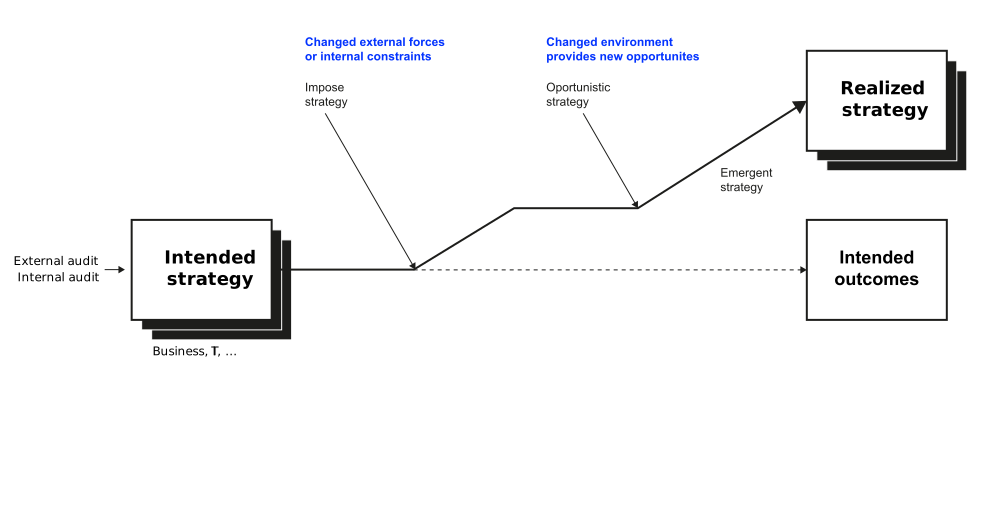
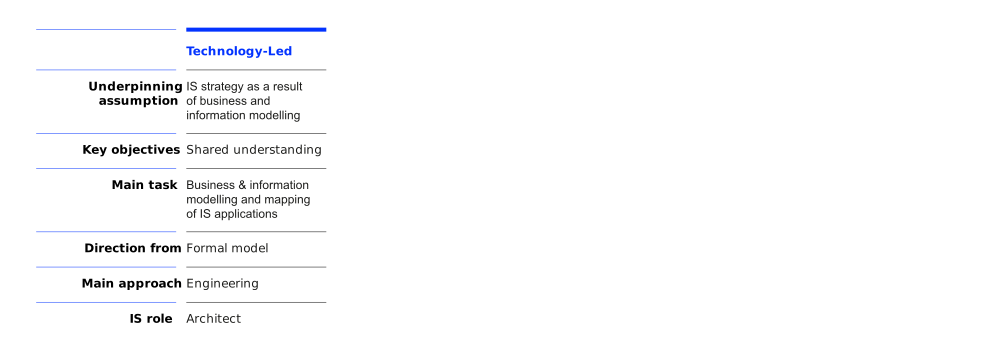
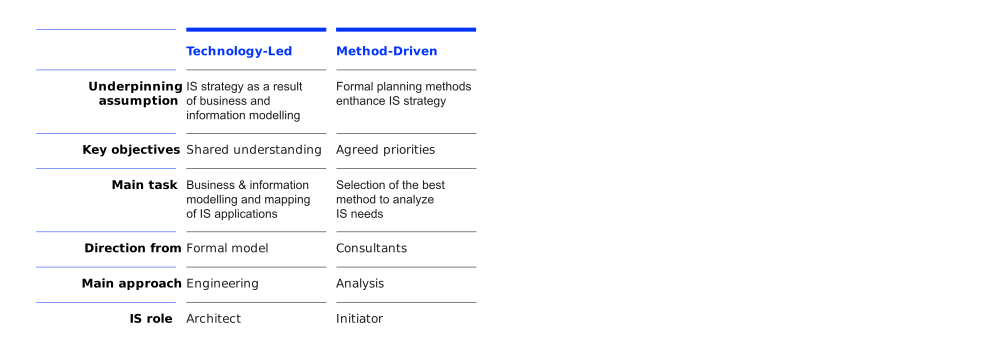
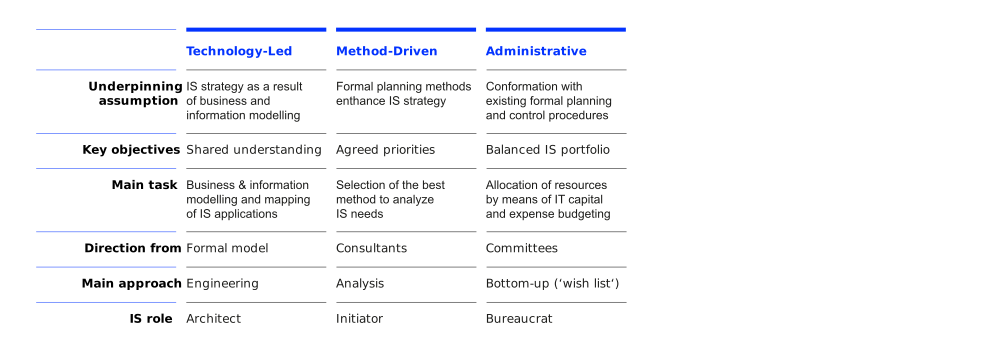
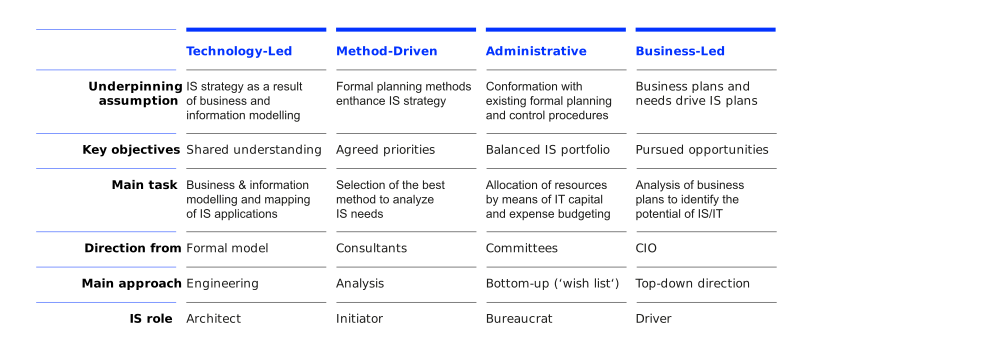
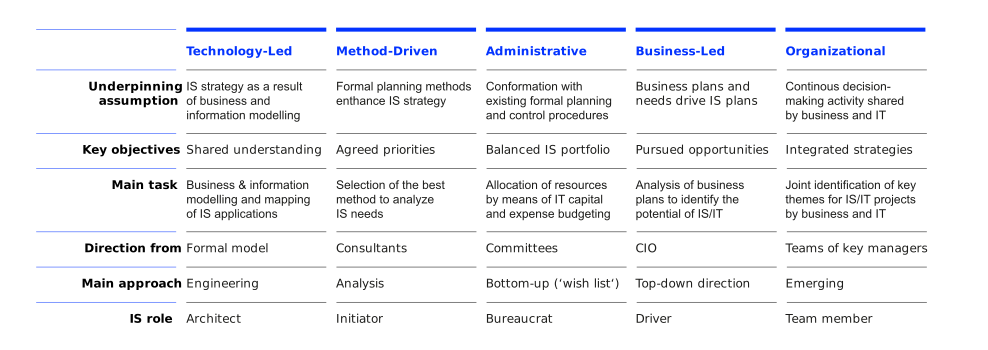
Earl (1993) identifies five distinct approaches to IS strategy formulation and IS planning within organizations.

Earl (1993)’s maturity levels


Exercise

Identify a real-life example per approach.

10:00
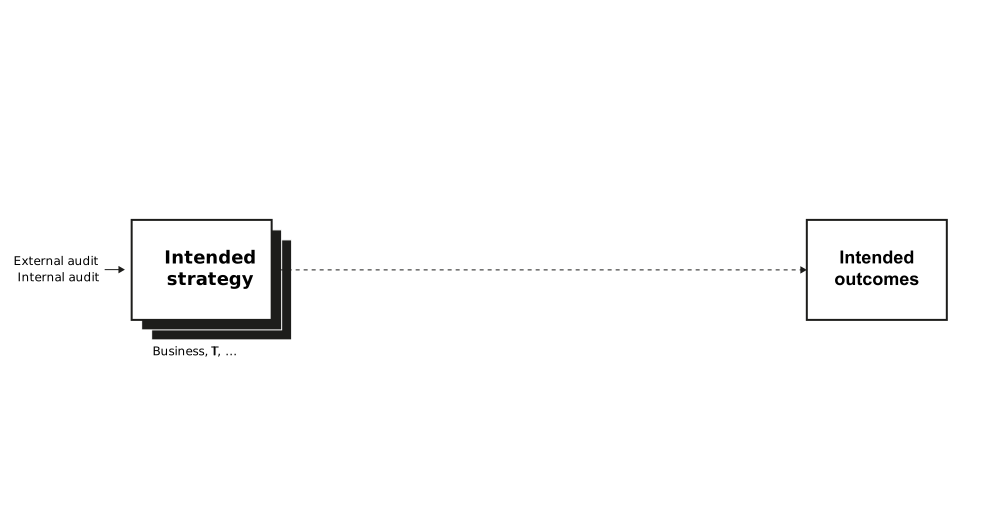
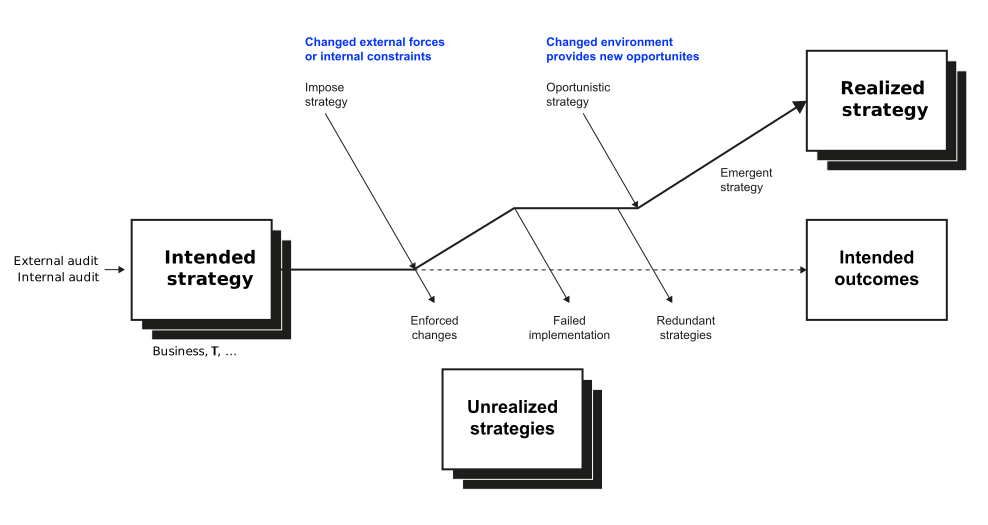
Emergence

The emergence of IT strategy


Deliverables

Main contents

Peppard & Ward (2016) suggest the following structure and contents for an IS strategy:

  1. Purpose of IS strategy
  2. Summary of business strategy
  3. Fields of action
  4. Application portfolio
  5. Issues arising from strategy

Other topics

Peppard & Ward (2016) points out following further topics that need to be addressed by strategic IS/IT management:

Organization and resource structures, approval and prioritization practices, vendor or supplier policies, HR policies, and IT accounting policies.

Conclusions

Critical success factors

Developing an IS strategy is a major undertaking, and despite a plethora of so-called ‘methods’, planning tools and brigades of consultants, it is still more of an art than a science (Peppard & Ward, 2016). However, there are a number of factors that can be considered critical to success:

People, executive buy-in, holistic view and in-depth understanding, consistent objectives, and ability to implement.

Review and consolidation

The following questions are designed to review and consolidate what you have learned and are a good starting point for preparing for the exam.

General questions:

  • Provide examples of how different organizational roles (e.g., IT professionals, business executives) may have varying perspectives on IS strategy. How can these perspectives be aligned to ensure strategic coherence?
  • Elaborate on the relationship between IS strategy and business strategy. How can an organization ensure that its IS strategy is aligned with and supportive of its broader business goals?
  • Discuss the impact of changes in business strategy on IS strategy and vice versa. Provide examples of how organizations can adapt their IS strategies to changes in the business environment.
  • Outline the key components of an IS strategy, including its scope, contents, and structure. How do these components contribute to the clarity and effectiveness of an IS strategy?
  • What other structures and policies are required or support the formation and implementation of IS strategy?
  • Compare and contrast the characteristics of an IS strategy document with other deliverables, such as an IT plan or technology roadmap (i.e., the outcome of IS planning). What distinguishes an IS strategy from these related documents?
  • How can organizations ensure that their investments align with strategic objectives? Discuss the role of stakeholders in the process of identifying and prioritizing IS investments. How can organizations balance the needs and expectations of various stakeholders in this context?
  • Discuss the challenges that organizations might face in implementing IS strategies and how these challenges can be addressed.
  • Imagine you are a CIO of a mid-sized company. How would you approach aligning the IT strategy with the business strategy? How would you measure the effectiveness of business-IT alignment in an organization? What metrics or indicators would you use?
  • Describe a scenario where misalignment between business and IT strategies led to negative consequences. What could have been done differently?
  • How can organizations ensure that business-IT alignment is maintained over time, especially in a rapidly changing business environment?

Questions with regards to Henderson & Venkatraman (1993) and their concept of business-IT alignment:

  • Why is achieving alignment between business and IT strategies important for organizational performance?
  • What are the four domains of strategic choice according to the Strategic Alignment Model (SAM) proposed by Henderson & Venkatraman (1993) and how do they interact?
  • Explain the dimensions of Strategic Fit and Functional Integration in the context of SAM.
  • What are potential challenges organizations might face in achieving business-IT alignment?
  • How has the concept of business-IT alignment evolved since Henderson and Venkatraman’s proposed the SAM?

Homework

  1. Read Henderson & Venkatraman (1993) and try to gain a comprehensive understanding of the business-IT alignment concept. Also do an exploratory research and try to understand how the concept has evolved.
  2. Read the case study “Sea Limited: Sustain or Expand”.

Q&A

Literature

Chen, D. Q., Mocker, M., Preston, D. S., & Teubner, A. (2010). Information systems strategy: Reconceptualization, measurement, and implications. MIS Quarterly, 233–259.
Earl, M. J. (1993). Experiences in strategic information systems planning. MIS Quarterly, 1–24.
Henderson, J. C., & Venkatraman, H. (1993). Strategic alignment: Leveraging information technology for transforming organizations. IBM Systems Journal, 32(1), 4–16.
Mintzberg, H. (1987). The strategy concept i: Five ps for strategy. California Management Review, 30(1), 11–24.
Peppard, J., & Ward, J. (2016). The strategic management of information systems: Building a digital strategy. Wiley.

Footnotes

  1. IS strategy is the broader organizational perspective on information systems, while IT strategy typically refers more narrowly to the technology infrastructure and IT function planning. In practice, these terms are often conflated, and we use them interchangeably to refer to the broader perspective.